Emergency Water Extraction & Flood Cleanup
Homeowners, contractors, and property managers book Fontana flood cleanup for standing water extraction and structural drying.
A musty odor after basement flooding usually means water remains in porous materials or hidden cavities. Emergency extraction removes standing water first, then separates Category 1 water from Category 3 sewage-contaminated black water.
Category 1 water comes from a sanitary supply, such as a burst supply line. Category 3 water requires stronger contamination controls because sewage can affect flooring, drywall, contents, and indoor air.
In Fontana, California, crews assess access, water depth, flooring, and the source before moving equipment. Homeowners needing broader coverage can review all service areas before requesting help.
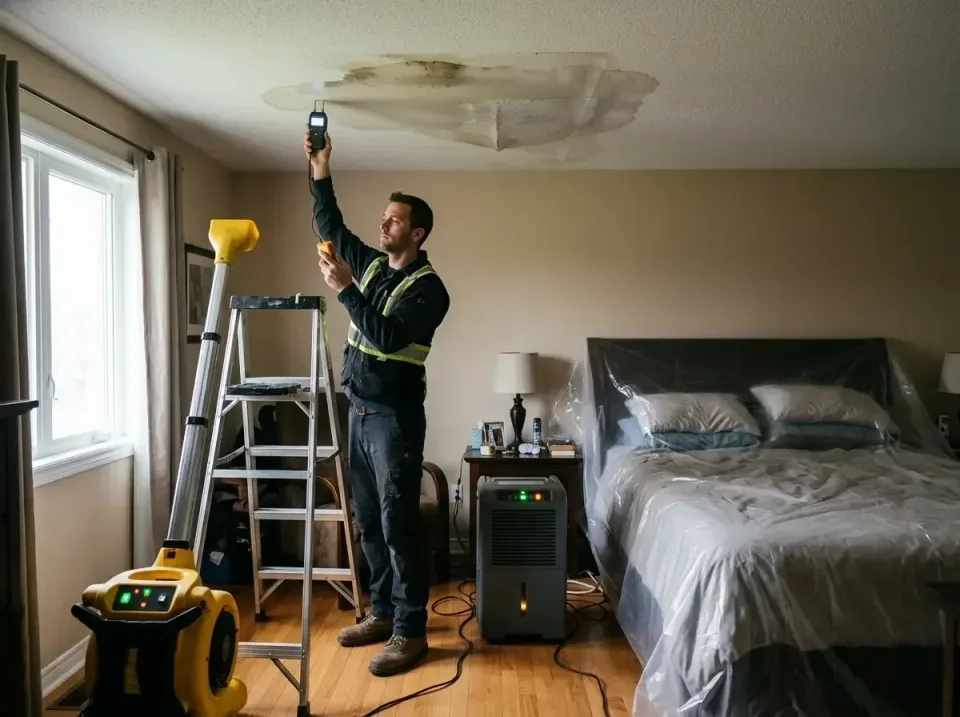
A brown ceiling stain spreading outward, damp carpet, or visible mold near a leaking pipe needs more than surface mopping. Water Damage Services can identify the affected area and explain the next practical step.
Musty odor: Basement odor can indicate trapped moisture beneath finishes, not simply dirty carpet.
Ceiling stains: A spreading brown stain may require source tracing before extraction begins, especially beneath plumbing or roofing.
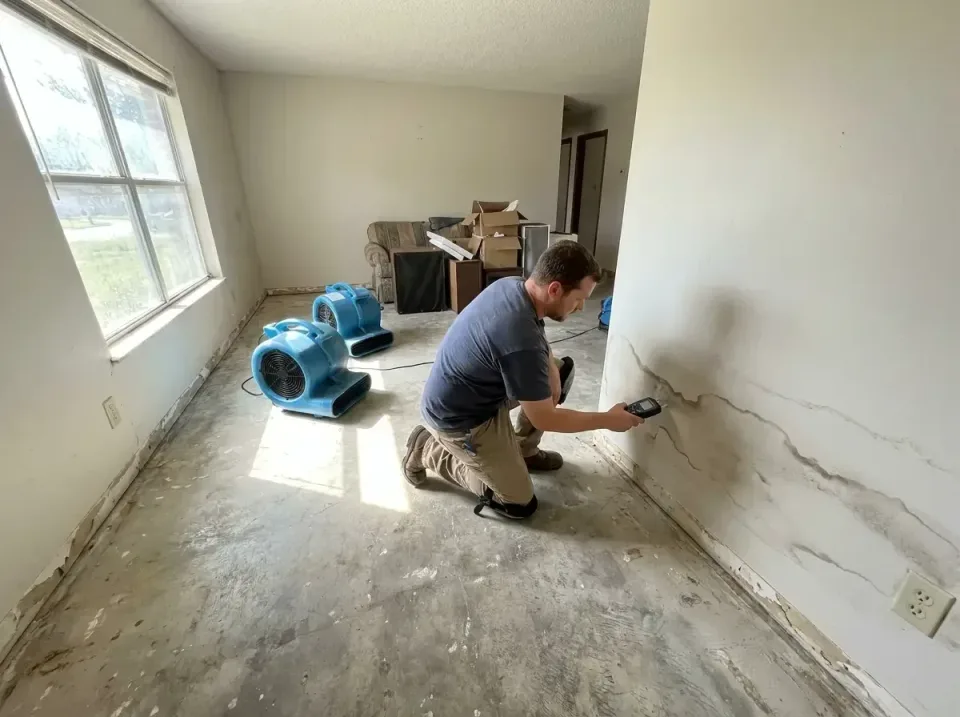
Damp carpet: Water extraction removes liquid, while moisture mapping records remaining wet areas for structural drying.
Crawl space ducts: Condensation around ducts points to a moisture balance problem involving air temperature and humidity.
Leaking pipe mold: Clearance testing provides post-remediation verification after containment and cleaning, rather than relying on appearance alone.
A water meter that moves with fixtures off may signal an active leak, so source control should precede drying. Residential leak response guidance can help homeowners understand why inspection and documentation matter before repairs.
Emergency extraction commonly costs $500–$1,500 when standing water volume is the main driver. A crew first stops the source, photographs rooms and contents, and checks whether water reached gypsum wallboard, insulation, carpet padding, or engineered hardwood flooring.
A truck-mounted extraction unit can remove large amounts of water quickly, while smaller vacuums suit limited areas or difficult access. This emergency flood cleanup stage is separate from structural drying, because materials can remain wet after visible water disappears.
Carpet still damp after cleanup often means pad, tack strips, subfloor, or wall edges retain moisture. Technicians use moisture mapping, meaning documented wet-area measurement, and compare readings with unaffected materials before deciding what can be dried or removed.
Psychrometry describes the relationship between air, moisture, and temperature. Air movers accelerate evaporation, while dehumidifiers remove vapor; both need daily monitoring rather than placement and guesswork. The ANSI/IICRC restoration standards overview helps explain why documented drying differs from simply running household fans.
Recurring sewage odor near a drain may indicate Category 3 water, even when the surface appears dry. Sewage contamination cleanup requires isolation, removal decisions, protective equipment, and careful handling of affected contents.
Negative air means filtered exhaust containment, while containment separates the work area from occupied rooms. The ANSI/IICRC S500 Standard for Professional Water Damage Restoration addresses water-damage procedures, while the ANSI/IICRC S520 Standard for Professional Mold Remediation applies when microbial growth becomes part of the project.
Emergency work also includes practical site planning. Accessible equipment placement paths, a clear route for hoses, and protected exits matter in homes, multifamily properties, and commercial spaces.
The Federal Emergency Management Agency administers the National Flood Insurance Program, so photographs, moisture readings, and equipment logs can support an insurance file. The IICRC formed in 1972, and modern restoration practice still relies on written measurements rather than a visual “looks dry” decision.
Water Damage Services can coordinate extraction, leak detection and plumbing repair, and insurance documentation when a Fontana property needs one organized record.
The right option depends on contamination, material damage, and the amount of drying still required. Digital moisture mapping reports help show why one scope costs more than another.
| Option | Best for | Key detail |
|---|---|---|
| Emergency flood cleanup | Standing water | Truck-mounted extraction and rapid removal |
| Structural drying | Damp carpet, drywall, or flooring | Equipment remains until readings meet the dry standard |
| Basement water removal | Large lower-level losses | Sewage may require containment and disposal controls |
| Mold remediation | Visible growth near leaks | HEPA-filtered containment zones and clearance testing |
A 36-inch target equipment access route helps crews move machines without damaging walls or blocking egress. HEPA containment practices also show why negative air limits spread while containment separates work zones.
Document: Photograph rooms, contents, and meter readings before moving materials or equipment.
Control: Stop incoming water, confirm power and water access, and isolate sewage areas from occupied spaces.
Extract: Begin clean water extraction, move furniture first, and route hoses away from exits; the Restoration Industry Association emphasizes organized job documentation.
Protect: Place air movers without blocking egress, using accessible equipment placement paths through the property.
Monitor: Log equipment placement, daily moisture readings, and any drying equipment repositioning.
Stage: Keep contents in labeled zones and obtain approval before disposal.
Close: Check dumpster placement locally and replace filters after contaminated-water projects.
Typical project ranges show which task drives the estimate:
Leak detection: $300–$1,200, based on access and repair complexity.
Emergency extraction: $500–$1,500, based on standing water volume.
Structural drying: $1,000–$4,000, based on affected materials.
Mold remediation: $1,500–$6,000, based on containment and square footage.
Basement cleanup: $2,000–$8,000, based on sewage, finishes, and disposal.
Commercial drying: $3,000–$15,000, based on size and downtime.
Structural drying may require a 32-inch minimum ADA clear doorway, air movers producing 800–1,200 CFM, or a 1,000–2,500-CFM unit. LGR dehumidifiers commonly remove 80–160 pints daily, depending on conditions. Quotes vary with scope, site conditions, contamination, materials, and labor.
Source control comes first. Psychrometry helps a technician balance air temperature and moisture, while an air mover accelerates evaporation from wet materials.
If visible mold is present, an antimicrobial treatment may support cleaning, but it does not replace removal of saturated materials. A containment barrier keeps disturbed debris from moving into occupied areas.
The 24–72 hour drying window is a mold-risk reduction goal, not a guarantee that every structure dries on schedule. An LGR dehumidifier can remove substantial moisture, but readings determine when equipment should leave.
Water Damage Services can compare moisture mapping results with unaffected materials before recommending removal. Commercial drying documentation examples show why equipment logs matter for larger properties.
Common mistake: Running fans without checking hidden moisture can spread odor while leaving padding, wall cavities, or subfloors wet.
Emergency water extraction usually involves source control, water removal, moisture measurement, and monitored drying. A practical drying target is within 4 percentage points of unaffected material, not merely a dry-looking surface.
The 24–72 hour drying window helps reduce mold risk, while hardwood floor drying and carpet decisions depend on moisture readings and material condition. A recurring sewage odor near a drain calls for contamination assessment rather than deodorizer alone.
For regional examples, water damage resources for Long Beach properties can provide additional context about similar restoration needs.
In Fontana, Water Damage Services can assess the source, document affected materials, and outline a clear extraction path. Request an evaluation at (833) 710-2743 before removing damaged finishes.
Browse all nationwide service options and choose the right fit for your project.
Homeowners, contractors, and property managers book Fontana flood cleanup for standing water extraction and structural drying.
Homeowners, contractors, and property managers book Fontana structural drying for wet walls, floors, carpets, and contents.
Homeowners, contractors, and property managers book Fontana leak tracing with thermal imaging and documented moisture mapping.
Homeowners, contractors, and property managers book Fontana crawl space drying, moisture mapping, and microbial-growth control.
Homeowners, property managers, and contractors book Fontana mold remediation for containment, removal, drying, and cleanup.
Homeowners and property managers book Fontana basement extraction, moisture checks, and structural drying after flooding or leaks.
Homeowners, property managers, and contractors book Fontana black mold removal with controlled spore containment.
Homeowners and property managers book Fontana ceiling drying for stains, leaks, damp drywall, and hidden moisture.
Sewage Water Removal & Contamination Cleanup in Fontana — practical container sizing, placement guidance, and disposal rules explained before you book.
Flood and fire cleanup in Fontana mixes wet materials and structural debris — carpet flood drying & wet material extraction with contamination-aware disposal guidance.
Homeowners, contractors, and property managers book Fontana hardwood floor drying after leaks, floods, or appliance failures.
Commercial drying removes water, protects materials, and documents progress for Fontana property managers, contractors, and business owners.
Homeowners, property managers, and contractors book Fontana emergency leak drying, extraction, and structural moisture control.
Homeowners and property managers book Fontana indoor air quality testing, mold prevention, containment, and odor control.
Homeowners, contractors, and property managers book Fontana dehumidification and air mover drying for controlled moisture removal.
Homeowners, contractors, and property managers book Fontana HEPA vacuuming and antimicrobial treatment after water or mold contamination.
Homeowners, contractors, and property managers book Fontana moisture inspections to locate hidden water and document drying needs.
Homeowners, contractors, and property managers book Fontana thermal imaging to locate hidden leaks and confirm wet building materials.
Homeowners, contractors, and property managers book Fontana content drying for wet furniture, electronics, documents, and salvageable belongings.
Local gray water damage removal & drying for Fontana with clear pricing drivers, weight limits, and scheduling you can plan around.
Need reliable Water Damage, Leak Detection & Mold Remediation Near Me in Fontana, CA, 92335? We extract water, map moisture, dry structures, and inspect leaks. Call (833) 710-2743.
Homeowners and property managers book Fontana mold removal, containment, and drying after leaks or flooding.
Homeowners and property managers book Fontana black water cleanup for sewage removal, contamination control, and documented structural drying.
Homeowners and property managers book Fontana odor treatment to remove lingering smells and improve indoor air after water damage.
Homeowners, contractors, and property managers book Fontana claim records, moisture readings, photos, and drying reports.
Select your region to see local water damage, leak detection & mold remediation near me providers and cities we cover.
We connect you with trusted local providers in your state or city. Call or email us today.