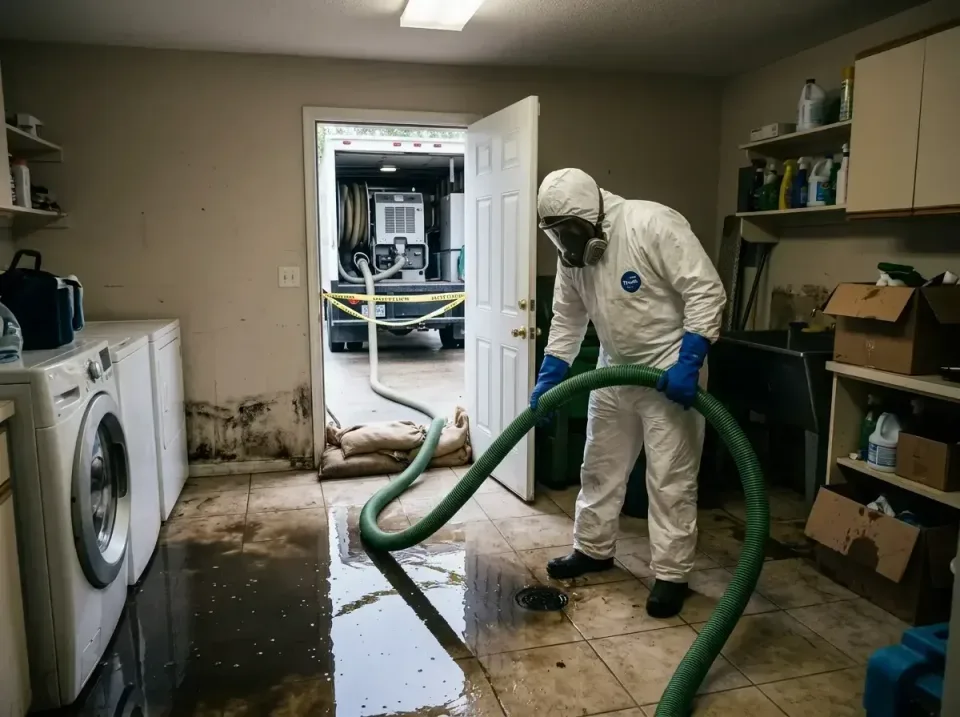
Emergency Water Extraction & Flood Cleanup
Homeowners, contractors, and property managers book Fontana flood cleanup for standing water extraction and structural drying.
If your water meter moves with fixtures off, water is usually flowing somewhere unexpectedly. In Fontana homes, that can point to a concealed supply-line leak, running toilet, irrigation fault, or appliance connection.
Turn off every faucet, ice maker, washer, and irrigation zone before watching the meter. A continuing change means the plumbing system needs leak detection rather than guesswork.
A small leak can wet gypsum wallboard, flooring, or insulation before stains appear. Category 2 water, meaning contaminated gray water, needs faster attention because it can affect materials and indoor air.
Check the all service areas if you manage property outside Fontana. Water Damage Services can pair source checking with moisture assessment when a moving meter accompanies damp flooring or odors.
Meter movement: A meter changing with fixtures off indicates active water use, so isolate toilets, appliances, irrigation, and hidden plumbing branches.
Water category: Category 1 water is sanitary supply water, but a long-standing leak can become a different cleanup concern after contacting building materials.
Source control: Stop incoming water before drying begins, because source control prevents new moisture from defeating structural drying.
Crawl space warning: Condensation on crawl space ducts can reflect moisture imbalance, not necessarily a broken pipe, so inspect the surrounding area.
Safety boundary: Category 3 water means sewage-contaminated black water; isolate that area and avoid tracking contamination through the home.
Psychrometry describes air, moisture, and temperature relationships during drying. Moisture mapping records wet-area measurements so technicians can compare materials instead of relying on touch.
The ANSI/IICRC S500 Standard for Professional Water Damage Restoration helps organize inspection and drying decisions, while a restoration process overview can illustrate why source control comes before equipment placement.
A moving meter with every fixture off confirms unexplained water use, but it does not identify the location. Start by closing the home’s main shutoff. If movement stops, the leak is likely inside the building; if it continues, check irrigation, the service line, or the meter area with the utility provider.
Brown ceiling stains spreading outward, soft flooring around a refrigerator, or carpet still damp after cleanup are stronger signs of material impact. An infrared thermal imaging camera can locate temperature patterns, while pin and pinless moisture meters confirm moisture and depth. A written moisture mapping report is more useful than a visual inspection alone.
For a Fontana home, inspect toilets, refrigerator supply tubing, water heaters, washing-machine valves, crawl spaces, and wall cavities. Water Damage Services can coordinate leak detection and plumbing repair before beginning water extraction or structural drying. Contractors following water damage inspection practices should document the source, affected materials, and meter readings.
Repairing the pipe stops new water, but it does not remove moisture trapped in gypsum wallboard, carpet backing, baseboards, or engineered hardwood flooring. Structural drying is controlled building-material moisture removal, not simply leaving windows open. The ANSI/IICRC S500 Standard for Professional Water Damage Restoration emphasizes measured drying progress.
Air movers accelerate evaporation; dehumidifiers remove vapor. An LGR dehumidifier can support drying by reducing air moisture, while daily readings show whether materials are approaching an unaffected-material dry standard. DIY fans may move air without proving that wall cavities or subfloors are dry.
A musty odor after basement flooding, condensation on crawl space ducts, or visible mold near a leaking pipe means the inspection should extend beyond the original wet spot. Clean water needs drying; sewage requires contamination controls. Recurring sewage odor near a drain can indicate a separate plumbing or contamination problem.
Visible mold is not automatically evidence of a large infestation, but disturbing contaminated material can spread particles. An antimicrobial disinfectant may be appropriate for certain cleaned surfaces, while porous materials may require salvage-versus-removal decisions. The ANSI/IICRC S520 Standard for Professional Mold Remediation addresses containment and remediation work separately from ordinary drying.
If sewage entered the room, isolate the area from occupied spaces and avoid spreading water through footwear or equipment. Black water sewage removal needs contamination controls, disposal planning, and documentation. A HEPA-filtered work setup may be needed when mold-contaminated materials are removed.
EPA guidance commonly allows limited homeowner cleanup when visible mold covers under 10 square feet, but a moving meter plus concealed moisture deserves professional assessment. Contact Water Damage Services when the meter continues moving, finishes remain damp, or a leak affects wall cavities, crawl spaces, or occupied rooms.
The right response depends on where the water is moving and whether materials are wet. Commercial water mitigation may require documented readings, equipment monitoring, and photographic insurance documentation.
Pin meters measure depth, while pinless meters scan surfaces without leaving probe holes. Thermal cameras locate patterns, but meters confirm moisture before removal decisions are made.
| Option | Best for | Key detail |
|---|---|---|
| Leak detection | Meter movement with fixtures off | Thermal cameras locate patterns; meters verify moisture |
| Structural drying | Damp carpet, wallboard, or flooring | Air movers accelerate evaporation; dehumidifiers remove vapor |
| Crawl space control | Duct condensation and humid framing | Moisture mapping identifies the affected zone |
| Commercial water mitigation | Offices, retail, or multifamily properties | Includes photographic insurance documentation |
A nearby restoration example such as commercial water mitigation guidance can help explain why equipment selection follows measurements, not room size alone.
Record the meter: Photograph rooms, contents, and meter readings before moving furniture or removing materials.
Stop the source: Close the main valve, appliance valve, or irrigation supply when safe, then note whether movement stops.
Check access: Confirm power and water access, and keep hoses away from exits and walking paths.
Protect contents: Move furniture before extraction and stage salvageable items in labeled zones.
Extract water: Use clean water extraction when the source is sanitary, while isolating sewage areas from occupied spaces.
Dry and monitor: Place equipment without blocking egress, document daily readings, and reposition drying equipment as needed.
Finish safely: Use containment for mold-related work and obtain contents approval before disposal.
PuroClean is one example of a residential water and mold restoration provider, but any contractor should explain the measurement and drying record before removal begins.
A water meter moving with fixtures off may require only a plumbing diagnosis, or it may involve extraction and material drying. Regional Fontana pricing changes with access, standing water, affected materials, and contamination.
Leak detection: $300–$1,200, based on access and repair complexity.
Emergency extraction: $500–$1,500, based on standing water volume.
Structural drying: $1,000–$4,000, based on affected materials.
Crawl space moisture control: Scope depends on duct condensation, access, and moisture sources.
Sewage contamination cleanup: Scope increases with contaminated finishes, isolation, and disposal.
Commercial drying: $3,000–$15,000, based on size and downtime.
A quote should separate source repair, water extraction, drying equipment, demolition, and disposal. Quotes vary with scope, site conditions, contamination, materials, and labor.
A room can feel dry while moisture remains behind baseboards or beneath flooring. Use psychrometric balance, moisture readings, and a dry standard instead of deciding by touch.
Water extraction removes liquid water, while evaporation versus dehumidification explains how remaining vapor leaves materials. A drying target within 4 percentage points of unaffected materials gives technicians a measurable stopping point.
Salvage versus removal should consider material condition, contamination, and drying feasibility. An LGR dehumidifier helps remove vapor, but it cannot correct an active leak or replace source control.
Common mistake: Leaving fans running without checking wall cavities, subfloors, or crawl space framing can hide a recurring moisture problem.
Water Damage Services can document readings, contents pack-out decisions, and equipment changes before a homeowner authorizes removal.
A water meter that moves with fixtures off signals unexplained flow, even when no stain is visible. Shut off likely branches, photograph the meter, and watch for damp carpet, soft flooring around a refrigerator, odors, or spreading ceiling marks.
Water Damage Services can inspect the source, document moisture, and separate insurance claim documentation from repair and drying work. Related needs may include carpet and upholstery cleaning or hardwood floor drying after the leak is controlled.
Air mover output commonly ranges from 800–1,200 CFM, but placement depends on room layout and material readings. Do not block exits while equipment operates.
For Fontana, CA homeowners, the next step is to request a Water Damage Services assessment with the meter reading and affected-room details ready.
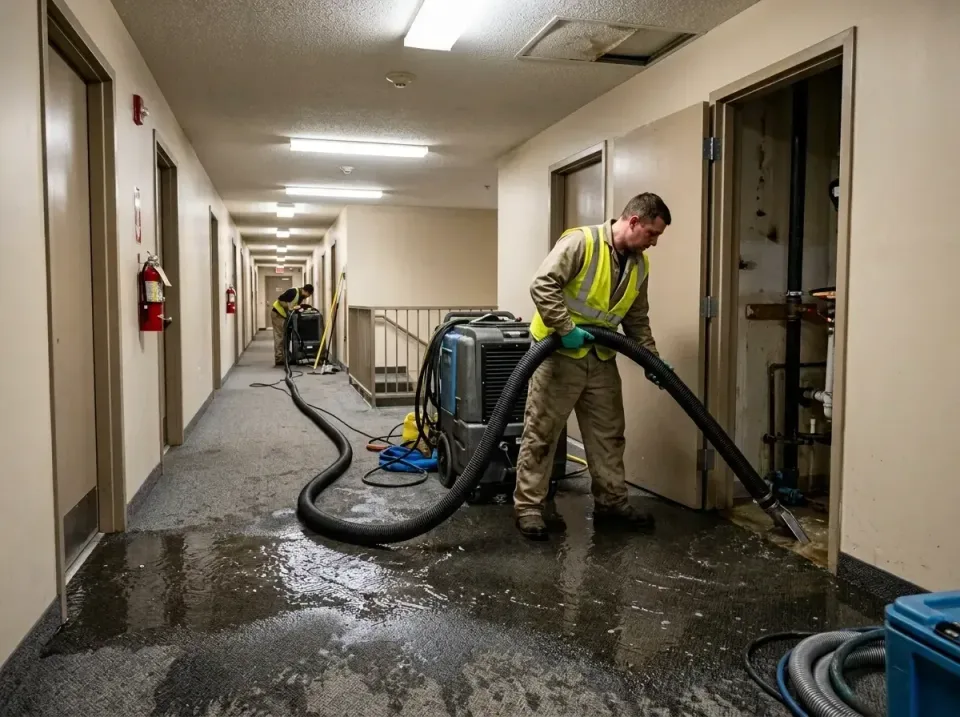
Browse all nationwide service options and choose the right fit for your project.
Homeowners, contractors, and property managers book Fontana flood cleanup for standing water extraction and structural drying.
Homeowners, contractors, and property managers book Fontana structural drying for wet walls, floors, carpets, and contents.
Homeowners, contractors, and property managers book Fontana leak tracing with thermal imaging and documented moisture mapping.
Homeowners, contractors, and property managers book Fontana crawl space drying, moisture mapping, and microbial-growth control.
Homeowners, property managers, and contractors book Fontana mold remediation for containment, removal, drying, and cleanup.
Homeowners and property managers book Fontana basement extraction, moisture checks, and structural drying after flooding or leaks.
Homeowners, property managers, and contractors book Fontana black mold removal with controlled spore containment.
Homeowners and property managers book Fontana ceiling drying for stains, leaks, damp drywall, and hidden moisture.
Sewage Water Removal & Contamination Cleanup in Fontana — practical container sizing, placement guidance, and disposal rules explained before you book.
Flood and fire cleanup in Fontana mixes wet materials and structural debris — carpet flood drying & wet material extraction with contamination-aware disposal guidance.
Homeowners, contractors, and property managers book Fontana hardwood floor drying after leaks, floods, or appliance failures.
Commercial drying removes water, protects materials, and documents progress for Fontana property managers, contractors, and business owners.
Homeowners, property managers, and contractors book Fontana emergency leak drying, extraction, and structural moisture control.
Homeowners and property managers book Fontana indoor air quality testing, mold prevention, containment, and odor control.
Homeowners, contractors, and property managers book Fontana dehumidification and air mover drying for controlled moisture removal.
Homeowners, contractors, and property managers book Fontana HEPA vacuuming and antimicrobial treatment after water or mold contamination.
Homeowners, contractors, and property managers book Fontana moisture inspections to locate hidden water and document drying needs.
Homeowners, contractors, and property managers book Fontana thermal imaging to locate hidden leaks and confirm wet building materials.
Homeowners, contractors, and property managers book Fontana content drying for wet furniture, electronics, documents, and salvageable belongings.
Local gray water damage removal & drying for Fontana with clear pricing drivers, weight limits, and scheduling you can plan around.
Need reliable Water Damage, Leak Detection & Mold Remediation Near Me in Fontana, CA, 92335? We extract water, map moisture, dry structures, and inspect leaks. Call (833) 710-2743.
Homeowners and property managers book Fontana mold removal, containment, and drying after leaks or flooding.
Homeowners and property managers book Fontana black water cleanup for sewage removal, contamination control, and documented structural drying.
Homeowners and property managers book Fontana odor treatment to remove lingering smells and improve indoor air after water damage.
Homeowners, contractors, and property managers book Fontana claim records, moisture readings, photos, and drying reports.
Select your region to see local water damage, leak detection & mold remediation near me providers and cities we cover.
We connect you with trusted local providers in your state or city. Call or email us today.