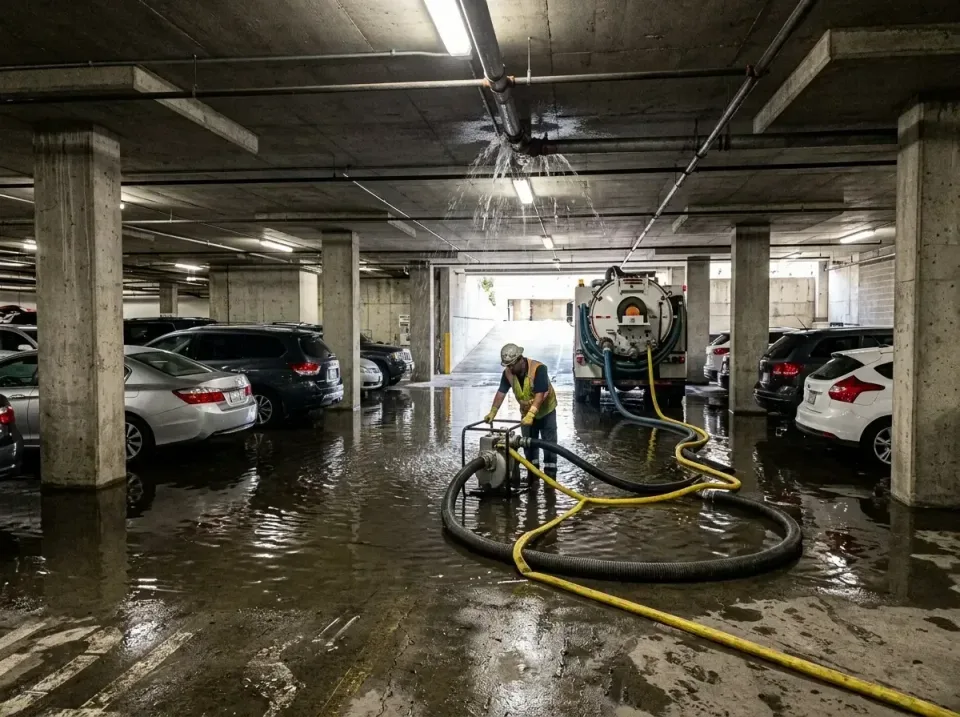
Emergency Water Extraction & Flood Cleanup
Homeowners, contractors, and property managers book Fontana flood cleanup for standing water extraction and structural drying.
A damp carpet can often be professionally dried, but replacement is safer after sewage, visible mold, or prolonged saturation. A brown ceiling stain spreading outward may also signal an active leak above.
In Fontana, California, musty odor after basement flooding usually means moisture remains below the carpet, pad, or baseboard. Water extraction should begin after the source is controlled.
Professionals use containment, an isolated work-area barrier, when mold or contaminated water could spread. That protects nearby rooms while technicians inspect flooring and wall materials.
Homeowners seeking broader coverage can review all service areas before arranging help outside Fontana. A local assessment identifies salvageable carpet before unnecessary removal.
Bring photos, leak details, and the time since saturation to the appointment. Those details help Water Damage Services separate drying from replacement decisions.
Musty odor: After basement flooding, odor can indicate trapped moisture beneath carpet or padding.
Brown ceiling stains: Spreading discoloration calls for source control before carpet cleaning or drying begins.
Drying threshold: A carpet still damp after cleanup should be compared against a dry standard, meaning unaffected material moisture.
Crawl space warning: Condensation on crawl space ducts can keep carpet damp even after surface water extraction.
Refrigerator damage: Soft flooring around a refrigerator may require moisture mapping, documented wet-area measurement, before deciding between drying and removal.
An air mover is a high-velocity drying fan, and common commercial output ranges from 800 to 1,200 CFM. Water damage drying guidance can help homeowners recognize why equipment placement matters.
Professionals compare readings, not touch alone. A carpet that feels dry may still conceal wet padding, tack strips, gypsum wallboard, or subflooring.
Carpet is usually a drying candidate when the water was clean, the material was reached quickly, and the backing remains stable. Carpet still damp after cleanup needs a second inspection because padding and subfloor moisture can outlast the visible wetness.
Technicians use carpet and upholstery cleaning after water extraction, then inspect seams, tack strips, and the pad. Pin and pinless moisture meters help compare affected materials with nearby dry areas. The ANSI/IICRC S500 Standard for Professional Water Damage Restoration supports a measured structural drying approach rather than relying on household fans.
A professional may use an air mover with a dehumidifier because air movers accelerate evaporation while dehumidifiers remove vapor. DIY fans lack monitoring, so they can leave moisture trapped beneath the carpet. A regional restoration overview explains why documented readings matter during drying work.
Replacement becomes more likely after Category 3 water, meaning sewage-contaminated black water, or after carpet remains wet long enough for odor and microbial growth. Recurring sewage odor near a drain requires contamination control, not ordinary cleaning.
Visible mold near a leaking pipe also changes the work. The ANSI/IICRC S520 Standard for Professional Mold Remediation supports separating affected materials from occupied areas, especially when carpet pad, drywall, or insulation cannot be cleaned reliably.
The EPA Mold Remediation in Schools and Commercial Buildings guidance is useful for understanding containment decisions. If mold affects more than a small isolated area, a contractor may recommend removal, HEPA cleaning, antimicrobial treatment, and clearance testing.
Condensation on crawl space ducts can keep flooring damp after an apparent cleanup. Crawl space moisture control may be needed before replacing carpet, or new flooring could become damp again.
A thermal imaging camera locates temperature patterns, while meters confirm moisture. This distinction matters near a refrigerator, plumbing wall, or brown ceiling stain spreading outward. Water Damage Services can combine leak detection, moisture mapping, and structural drying when the source is not obvious.
Psychrometry describes the relationship among air, moisture, and temperature. Technicians use that information to balance evaporation and dehumidification, then document daily readings until affected materials approach the dry standard.
Home drying may suit a small clean-water spill that is extracted immediately and shows no odor, swelling, or hidden migration. It is less suitable after basement flooding, recurring leaks, or dampness that returns after cleaning.
Professionals bring extraction equipment, moisture meters, air movers, and an LGR dehumidifier. The LGR unit removes moisture from air more efficiently than ordinary room cooling, while daily readings show whether the plan is working.
Call Water Damage Services when carpet stays damp, flooring feels soft, a water meter moves with fixtures off, or mold is visible. A measured decision can preserve carpet when feasible and prevent replacement costs caused by an unresolved leak.
The table below separates common responses by water type and drying need. Clean water needs drying, while sewage requires contamination controls.
| Option | Best for | Key detail |
|---|---|---|
| Professional carpet drying | Clean carpet with stable backing | Axial air movers commonly deliver 1,000–2,500 CFM. |
| LGR dehumidification | Damp carpet and humid rooms | Portable units commonly remove 80–160 pints daily. |
| Carpet removal | Sewage or unsalvageable backing | Category 3 water requires contamination control and disposal planning. |
| Contents pack-out | Furniture and items blocking access | Salvageable contents inventory protects items before extraction. |
Daily drying equipment monitoring helps confirm progress rather than guessing from surface feel. Restoration equipment information can clarify why air movement and humidity removal serve different functions.
A technician may reposition equipment as readings change. That adjustment can reduce unnecessary carpet removal while protecting subflooring and wall materials.
Document: Photograph rooms, contents, and visible moisture before moving carpet or furniture.
Control access: Confirm power and water access, then keep hoses away from exits and walking paths.
Extract: Move furniture before water extraction, while isolating sewage areas from occupied spaces.
Place equipment: Arrange air movers without blocking egress, using same-day equipment placement when available.
Monitor: Record moisture readings and reposition drying equipment as readings change.
Protect contents: Stage belongings in labeled zones, obtain approval before disposal, and replace filters after contaminated-water projects.
The FEMA National Flood Insurance Program may request photographs and drying records after qualifying flood damage. Flood restoration documentation guidance can help homeowners organize records before cleanup progresses.
Emergency extraction commonly costs $500–$1,500, with standing water volume affecting labor, equipment, and disposal needs.
Structural drying often ranges from $1,000–$4,000 when carpet, padding, subflooring, and wall materials require controlled drying. A 20-yard roll-off container may be considered when removal creates substantial debris.
Commercial water mitigation can range from $3,000–$15,000 because property size, equipment duration, and business downtime increase the scope. Fontana pricing can differ from other California markets because access, labor, and disposal arrangements vary.
Mold remediation may add $1,500–$6,000 when containment and affected square footage require specialized work. Quotes vary with scope, site conditions, contamination, materials, and labor.
Source control comes first: stop the leak before trying to dry the carpet. Evaporation moves moisture into the air, but dehumidification must remove that vapor.
A balanced psychrometric plan keeps temperature and relative humidity moving in a useful direction. Salvage versus removal then depends on contamination, backing condition, and whether drying can reach the full assembly.
A carpet may look acceptable while its pad remains wet. Technicians compare moisture readings with unaffected materials before approving continued drying.
Contamination control is especially important after drain backups or sewage exposure. Category 2 or Category 3 water should not be treated like a clean spill.
Common mistake: Replacing carpet before fixing the leaking appliance, pipe, roof, or crawl space moisture source.
Water Damage Services can inspect the source, map moisture, and explain the drying or removal path without asking homeowners to guess.
Drying is usually reasonable after quick clean-water extraction, while sewage, visible mold, prolonged saturation, or unstable backing often support replacement. Musty odor after basement flooding deserves inspection rather than masking.
Water Damage Services can coordinate leak detection and plumbing repair before drying begins. The same assessment may identify hardwood floor drying needs, temporary roof leak protection, or damp wall materials.
Keep photos, moisture readings, receipts, and damaged-item notes for insurance claim documentation. Homeowners needing help outside Fontana can review service coverage areas before scheduling an assessment.
Start by protecting occupants, stopping incoming water, and avoiding unnecessary carpet removal. Then request a documented inspection from Water Damage Services for the next practical step.
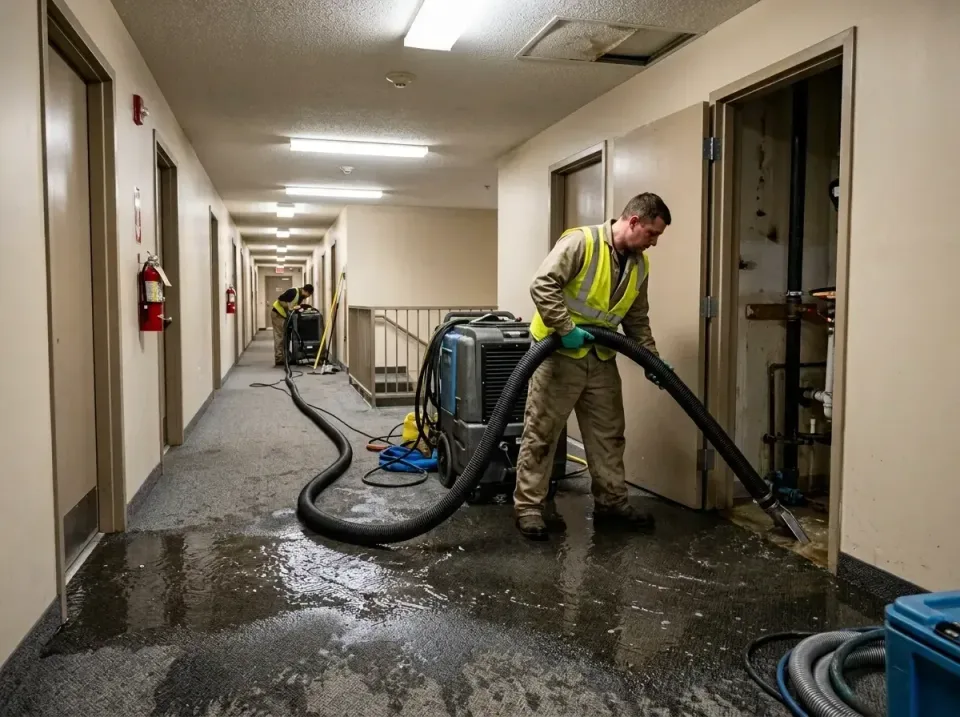
Browse all nationwide service options and choose the right fit for your project.
Homeowners, contractors, and property managers book Fontana flood cleanup for standing water extraction and structural drying.
Homeowners, contractors, and property managers book Fontana structural drying for wet walls, floors, carpets, and contents.
Homeowners, contractors, and property managers book Fontana leak tracing with thermal imaging and documented moisture mapping.
Homeowners, contractors, and property managers book Fontana crawl space drying, moisture mapping, and microbial-growth control.
Homeowners, property managers, and contractors book Fontana mold remediation for containment, removal, drying, and cleanup.
Homeowners and property managers book Fontana basement extraction, moisture checks, and structural drying after flooding or leaks.
Homeowners, property managers, and contractors book Fontana black mold removal with controlled spore containment.
Homeowners and property managers book Fontana ceiling drying for stains, leaks, damp drywall, and hidden moisture.
Sewage Water Removal & Contamination Cleanup in Fontana — practical container sizing, placement guidance, and disposal rules explained before you book.
Flood and fire cleanup in Fontana mixes wet materials and structural debris — carpet flood drying & wet material extraction with contamination-aware disposal guidance.
Homeowners, contractors, and property managers book Fontana hardwood floor drying after leaks, floods, or appliance failures.
Commercial drying removes water, protects materials, and documents progress for Fontana property managers, contractors, and business owners.
Homeowners, property managers, and contractors book Fontana emergency leak drying, extraction, and structural moisture control.
Homeowners and property managers book Fontana indoor air quality testing, mold prevention, containment, and odor control.
Homeowners, contractors, and property managers book Fontana dehumidification and air mover drying for controlled moisture removal.
Homeowners, contractors, and property managers book Fontana HEPA vacuuming and antimicrobial treatment after water or mold contamination.
Homeowners, contractors, and property managers book Fontana moisture inspections to locate hidden water and document drying needs.
Homeowners, contractors, and property managers book Fontana thermal imaging to locate hidden leaks and confirm wet building materials.
Homeowners, contractors, and property managers book Fontana content drying for wet furniture, electronics, documents, and salvageable belongings.
Local gray water damage removal & drying for Fontana with clear pricing drivers, weight limits, and scheduling you can plan around.
Need reliable Water Damage, Leak Detection & Mold Remediation Near Me in Fontana, CA, 92335? We extract water, map moisture, dry structures, and inspect leaks. Call (833) 710-2743.
Homeowners and property managers book Fontana mold removal, containment, and drying after leaks or flooding.
Homeowners and property managers book Fontana black water cleanup for sewage removal, contamination control, and documented structural drying.
Homeowners and property managers book Fontana odor treatment to remove lingering smells and improve indoor air after water damage.
Homeowners, contractors, and property managers book Fontana claim records, moisture readings, photos, and drying reports.
Select your region to see local water damage, leak detection & mold remediation near me providers and cities we cover.
We connect you with trusted local providers in your state or city. Call or email us today.