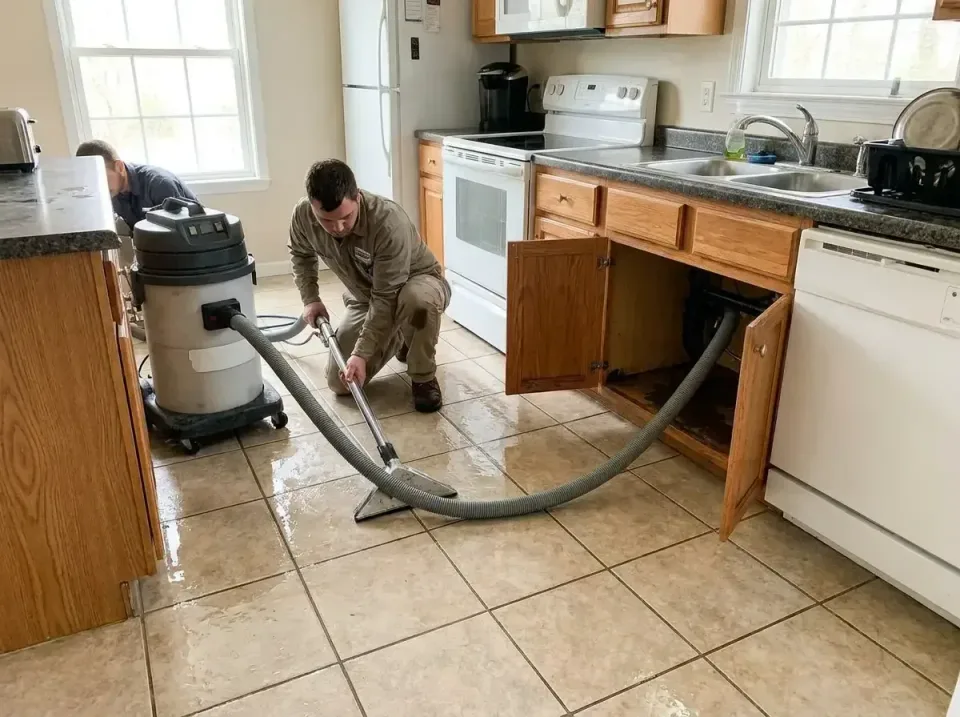
Emergency Water Extraction & Flood Cleanup
Homeowners, contractors, and property managers book Fontana flood cleanup for standing water extraction and structural drying.
Yes, homeowners can dry a small, clean crawl space after stopping the water source. The goal is moisture reduction within 24–72 hours, before damp materials support mold growth.
Condensation on crawl space ducts often signals high humidity, not just a surface spill. In Fontana, California, warm outdoor air can worsen moisture when it enters a cooler crawl space.
Start with source control, ventilation, and safe electrical access. A household fan may move air, but it cannot confirm moisture inside insulation, framing, or subflooring.
Phoenix Restoration Equipment publishes drying equipment information that helps explain why commercial air movement differs from ordinary fans. Water Damage Services can inspect hidden moisture when odors, staining, or recurring condensation remain.
Homeowners outside Fontana can review all service areas before arranging local water damage inspection and moisture assessment.
Musty odor: A musty odor after basement flooding may indicate trapped moisture beyond visible surfaces.
Ceiling stains: Brown ceiling stains spreading outward suggest an active or unresolved leak above the affected room.
Damp carpet: Carpet still damp after cleanup needs moisture mapping, not simply stronger air circulation.
Duct condensation: Condensation on crawl space ducts reflects a psychrometric imbalance between air temperature and humidity.
Mold warning: Visible mold near a leaking pipe may require containment and professional evaluation, especially beyond limited homeowner cleanup.
A dry standard compares affected materials with unaffected areas, helping distinguish salvage from removal. Water extraction removes liquid water, while a portable dehumidifier may remove 70–160 pints daily under stated operating conditions.
The ANSI/IICRC S500 Standard for Professional Water Damage Restoration emphasizes measured structural drying rather than appearance alone. Before choosing equipment, this restoration service overview illustrates why documented readings matter.
A homeowner may handle a small Category 1 water event when the source is stopped, no sewage is present, and materials remain accessible. Remove standing water, open access points, and keep electrical cords away from wet areas. A crawl space with recurring sewage odor, visible mold, or saturated insulation needs professional assessment instead.
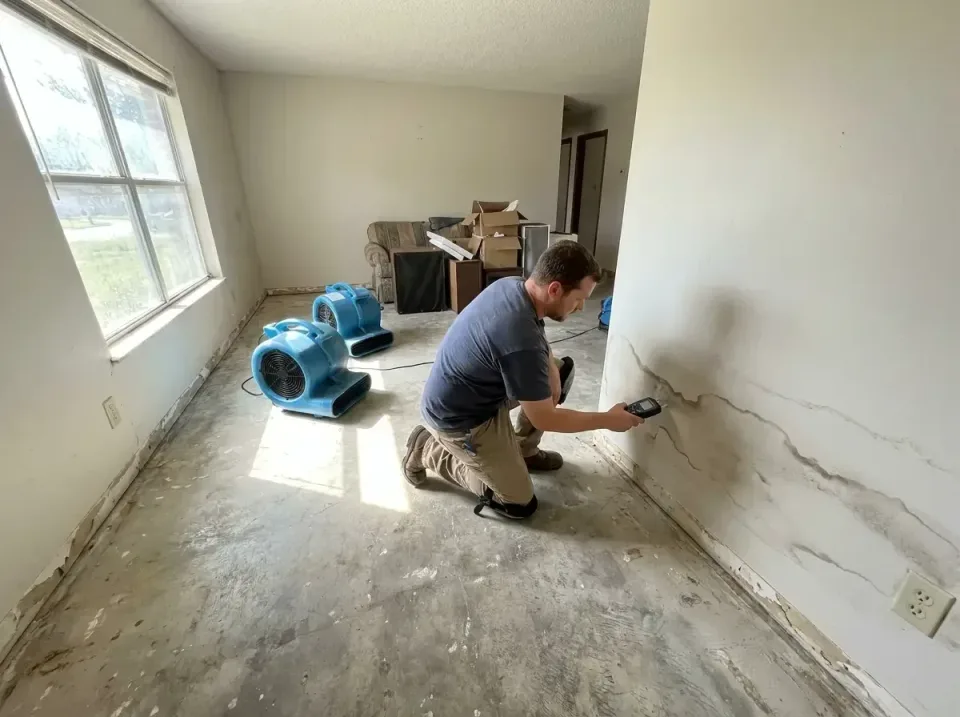
Psychrometry describes the relationship between air, moisture, and temperature. A fan can accelerate evaporation, but moisture may simply move into framing or the living space if humidity is not removed. Pin and pinless moisture meters help identify whether subflooring, sill plates, or insulation remain wet.
A practical drying check compares affected materials with an unaffected dry standard. If readings do not approach that comparison, stopping because the surface feels dry can leave moisture behind. Water Damage Services uses moisture assessment to determine whether crawl space moisture control is enough or structural drying is needed.
Household fans are useful for limited air circulation, but professional equipment changes the result. An air mover pushes high-velocity air across wet materials, while an LGR dehumidifier removes water vapor. A common portable dehumidifier range is 70–160 pints daily, depending on conditions and placement.
Daily drying equipment monitoring matters because outdoor humidity, temperature, and material exposure change throughout the job. Restoration equipment manufacturers such as Dri-Eaz provide commercial drying systems, but equipment still requires correct placement and adjustment. Logs should record equipment location, readings, and daily changes.
Accessible equipment placement paths also protect occupants and workers. Keep hoses away from exits, preserve a 36-inch target equipment access route where possible, and avoid placing air movers across walkways. Drying equipment should be repositioned as readings change rather than left running in one location.
For a Fontana crawl space, Water Damage Services can confirm power and water access, protect floors, and document drying progress. That record is useful when a claim includes water damage removal, structural drying, or leak detection.
DIY drying becomes unsafe when water is Category 2 or Category 3, insulation is saturated, or mold covers more than a small isolated area. The EPA mold guidance threshold for limited homeowner cleanup is under 10 square feet; larger areas may require containment, removal, and professional remediation.
A HEPA air scrubber provides rated filtration of 99.97% at 0.3 microns, but filtration does not replace source control. Polyethylene containment sheeting and negative air can limit spread during mold remediation. OSHA 29 CFR 1910.134 also applies to respiratory protection programs, including fit and use requirements.
The ANSI/IICRC S520 Standard for Professional Mold Remediation addresses containment and cleaning practices. Antimicrobial treatment may be appropriate after cleaning, but spraying a product over wet wood or visible growth does not correct the moisture source.
When a water meter moves with fixtures off, arrange leak detection and plumbing repair before drying. Thermal imaging can locate temperature patterns, but meters confirm moisture. A California water damage resource similarly shows why source identification should precede equipment placement.
Call Water Damage Services when the crawl space connects to occupied rooms, insulation is wet, the area cannot be safely accessed, or drying has not improved within the first day. Professionals can perform water extraction, moisture mapping, and daily structural drying checks instead of relying on smell or touch.
A brown ceiling stain, soft flooring around a refrigerator, or carpet still damp after cleanup may point to a larger connected moisture path. Drying one visible area can leave gypsum wallboard, engineered hardwood flooring, or subflooring wet elsewhere.
Photographs, meter readings, and equipment logs support insurance claim documentation. If mold is suspected, isolate the area and avoid disturbing growth until the water category and material condition are assessed. This approach reduces rework and helps separate salvageable contents from materials requiring removal.
The right option depends on water category, access, and whether materials need structural drying. A 36-inch target equipment access path makes equipment placement safer.
| Option | Best for | Key detail |
|---|---|---|
| Homeowner air circulation | Small Category 1 surface dampness | Fans move air, but provide no verified drying record |
| Emergency flood cleanup | Standing water after a clean supply leak | Water extraction should precede drying equipment |
| Structural drying | Wet framing, subfloor, or insulation | Pin meters measure depth; pinless meters scan surfaces |
| Mold remediation | Visible growth or prolonged dampness | Negative air limits spread; containment separates work zones |
For equipment planning, this restoration equipment resource helps explain why commercial air movers and monitoring outperform ordinary fans. Clean water needs drying, while sewage requires contamination controls.
Stop the source: Arrange leak detection and plumbing repair before placing fans or dehumidifiers.
Document conditions: Photograph rooms, contents, and meter readings before removing wet materials.
Clear the route: Confirm power access, protect walkways, and place air movers without blocking exits or egress.
Remove contents: Move furniture first and stage salvageable items in labeled zones.
Measure daily: Log equipment placement, readings, and daily changes instead of judging dryness by touch.
Adjust equipment: Reposition drying equipment as readings change, especially around engineered hardwood flooring.
Handle disposal safely: Have dumpster placement checked locally; commercial drying can reach $3,000–$15,000 when size and downtime increase. OSHA 29 CFR 1910.134 Respiratory Protection also guides respirator programs for contaminated work.
A homeowner may spend less on a small clean-water cleanup, but hidden moisture can increase later repair work. Structural drying commonly ranges from $1,000–$4,000 when affected materials require controlled moisture removal.
Leak detection: $300–$1,200, based on access and repair complexity.
Emergency extraction: $500–$1,500, based on standing water volume.
Structural drying: $1,000–$4,000, based on affected materials.
Mold remediation: $1,500–$6,000, based on containment and square footage.
Basement cleanup: $2,000–$8,000, based on sewage, finishes, and disposal.
Commercial drying: $3,000–$15,000, based on size and downtime.
The mold-risk reduction goal is drying within 24–72 hours. Technicians may compare readings within 4 percentage points of unaffected materials, while HEPA filtration is rated at 99.97% at 0.3 microns.
Sewage contamination cleanup usually costs more because Category 3 water requires contamination controls, disposal, and protective procedures. Quotes vary with scope, site conditions, contamination, materials, and labor.
Expert insight:
Evaporation versus dehumidification is the difference between moving moisture and removing it. An air mover speeds evaporation, while a dehumidifier captures vapor; both must suit the crawl space conditions.
Use containment as an isolated work-area barrier when disturbing mold or contaminated insulation. A HEPA air scrubber can support cleaner air, but it does not fix a leaking pipe or wet subfloor.
Antimicrobial treatment is an applied microbial-growth inhibitor, not a substitute for cleaning and drying. If mold remains after source control, clearance testing can provide post-remediation verification.
The EPA Mold Remediation in Schools and Commercial Buildings guidance supports controlling moisture before treating growth. Water Damage Services can assess moisture mapping, equipment placement, and safe access before a homeowner attempts removal.
Common mistake: Running a fan continuously while sealed crawl space air remains humid, leaving framing wet beneath a dry-looking surface.
Homeowners can sometimes dry a small clean crawl space, but success depends on stopping the source and confirming material moisture. Condensation, recurring odors, or damp flooring indicate that surface airflow was not enough.
Water Damage Services can coordinate hardwood floor drying, carpet and upholstery cleaning, and moisture assessment when crawl space water affects living areas. Carpet still damp after cleanup deserves measured inspection before replacement is approved.
Keep photographs and readings for insurance claim documentation, especially after a plumbing leak or appliance failure. Ask for a clear scope covering extraction, drying, removal, and any needed mold work.
Fontana residents can review local restoration coverage information while preparing property details. The next step is to contact Water Damage Services with the water source, affected materials, access conditions, and visible symptoms.
Browse all nationwide service options and choose the right fit for your project.
Homeowners, contractors, and property managers book Fontana flood cleanup for standing water extraction and structural drying.
Homeowners, contractors, and property managers book Fontana structural drying for wet walls, floors, carpets, and contents.
Homeowners, contractors, and property managers book Fontana leak tracing with thermal imaging and documented moisture mapping.
Homeowners, contractors, and property managers book Fontana crawl space drying, moisture mapping, and microbial-growth control.
Homeowners, property managers, and contractors book Fontana mold remediation for containment, removal, drying, and cleanup.
Homeowners and property managers book Fontana basement extraction, moisture checks, and structural drying after flooding or leaks.
Homeowners, property managers, and contractors book Fontana black mold removal with controlled spore containment.
Homeowners and property managers book Fontana ceiling drying for stains, leaks, damp drywall, and hidden moisture.
Sewage Water Removal & Contamination Cleanup in Fontana — practical container sizing, placement guidance, and disposal rules explained before you book.
Flood and fire cleanup in Fontana mixes wet materials and structural debris — carpet flood drying & wet material extraction with contamination-aware disposal guidance.
Homeowners, contractors, and property managers book Fontana hardwood floor drying after leaks, floods, or appliance failures.
Commercial drying removes water, protects materials, and documents progress for Fontana property managers, contractors, and business owners.
Homeowners, property managers, and contractors book Fontana emergency leak drying, extraction, and structural moisture control.
Homeowners and property managers book Fontana indoor air quality testing, mold prevention, containment, and odor control.
Homeowners, contractors, and property managers book Fontana dehumidification and air mover drying for controlled moisture removal.
Homeowners, contractors, and property managers book Fontana HEPA vacuuming and antimicrobial treatment after water or mold contamination.
Homeowners, contractors, and property managers book Fontana moisture inspections to locate hidden water and document drying needs.
Homeowners, contractors, and property managers book Fontana thermal imaging to locate hidden leaks and confirm wet building materials.
Homeowners, contractors, and property managers book Fontana content drying for wet furniture, electronics, documents, and salvageable belongings.
Local gray water damage removal & drying for Fontana with clear pricing drivers, weight limits, and scheduling you can plan around.
Need reliable Water Damage, Leak Detection & Mold Remediation Near Me in Fontana, CA, 92335? We extract water, map moisture, dry structures, and inspect leaks. Call (833) 710-2743.
Homeowners and property managers book Fontana mold removal, containment, and drying after leaks or flooding.
Homeowners and property managers book Fontana black water cleanup for sewage removal, contamination control, and documented structural drying.
Homeowners and property managers book Fontana odor treatment to remove lingering smells and improve indoor air after water damage.
Homeowners, contractors, and property managers book Fontana claim records, moisture readings, photos, and drying reports.
Select your region to see local water damage, leak detection & mold remediation near me providers and cities we cover.
We connect you with trusted local providers in your state or city. Call or email us today.