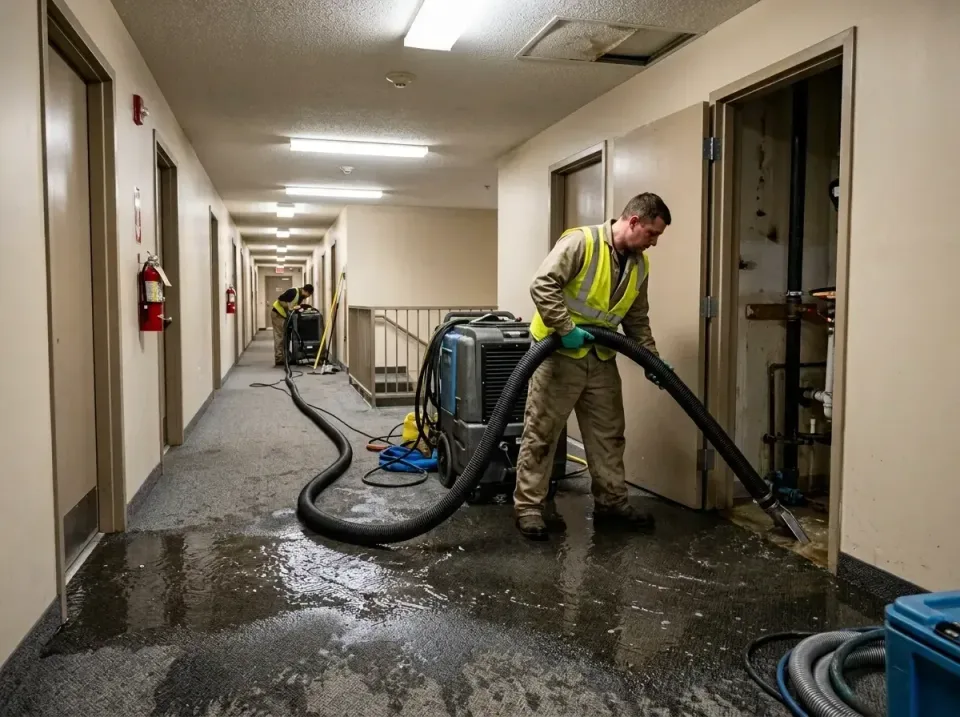
Emergency Water Extraction & Flood Cleanup
Homeowners, contractors, and property managers book Fontana flood cleanup for standing water extraction and structural drying.
A recurring sewage odor near a drain usually means the source remains active, trapped, or improperly cleaned. In Fontana, California, clearance testing can verify whether post-remediation conditions are acceptable.
Common causes include a dry trap, damaged drain line, failed wax ring, or contaminated material beneath flooring. Masking the smell rarely removes the source.
Water Damage Services starts with source inspection, moisture mapping, and targeted cleaning. The team can separate plumbing concerns from water damage concerns before removal begins.
If you manage properties beyond Fontana, review the company’s all service areas while arranging local coverage. Persistent odor deserves documented findings rather than repeated fragrance treatments.
Musty basement odor: A musty odor after basement flooding can indicate trapped moisture behind finishes, not only a plumbing smell.
Spreading ceiling stains: Brown ceiling stains spreading outward suggest moisture movement that needs inspection above the visible mark.
Damp carpet: Carpet still damp after cleanup may need measured structural drying instead of more surface deodorizer.
Crawl space condensation: Condensation on crawl space ducts changes psychrometry, meaning air, moisture, and temperature relationships require review.
Visible pipe mold: Visible mold near a leaking pipe should be isolated before cleaning, especially when contaminated materials may be involved. Restoration planning guidance can help property owners understand why documentation matters.
A drain odor returns when cleaning treats the symptom while the source remains. A partially blocked vent, dry trap, cracked connection, or sewage-affected subfloor can keep releasing odor after the room appears dry.
Start by noting when the smell appears. Odor after showering, laundry, or toilet use points toward drainage or vent activity. A water meter that moves with fixtures off can indicate a concealed supply leak, although it does not prove a sewer problem.
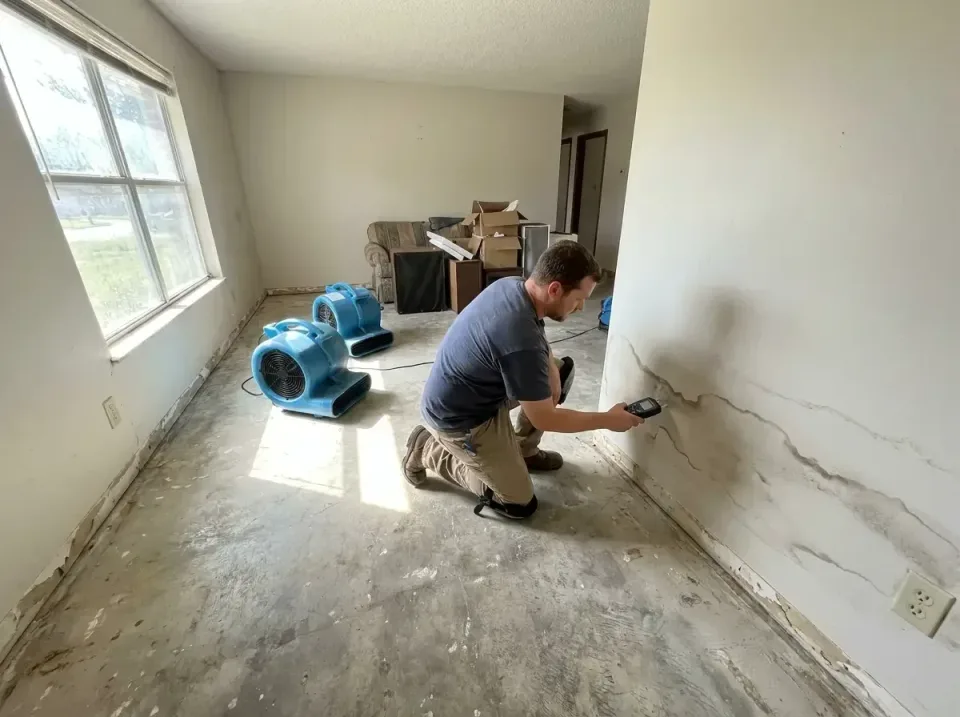
Water Damage Services uses leak detection and moisture mapping to compare wet areas with unaffected materials. A pin meter checks material depth, while a pinless meter scans broader surfaces. That distinction helps avoid removing sound flooring unnecessarily.
Sewage is Category 3 water, meaning sewage-contaminated black water. Clean water needs drying, but sewage requires contamination controls, material evaluation, and safe disposal.
Workers should isolate sewage areas from occupied spaces before disturbing flooring or gypsum wallboard. Polyethylene containment sheeting can separate the work zone, while negative air helps direct filtered exhaust away from clean areas.
The ANSI/IICRC S500 Standard for Professional Water Damage Restoration addresses water-loss procedures, while the ANSI/IICRC S520 Standard for Professional Mold Remediation addresses mold-related controls. The EPA’s mold guidance also supports careful assessment before disturbing affected materials.
A contents pack-out may be needed when stored belongings sit near the drain. Items should be documented, staged, and evaluated for salvage before disposal approval is requested. Odor treatment follows source removal, extraction, and cleaning rather than replacing them.
A recurring smell may persist inside subfloor seams, wall cavities, or insulation. Water extraction removes liquid water, but structural drying removes retained moisture from building materials.
An air mover accelerates evaporation, while an LGR dehumidifier removes vapor. Technicians should record readings each day and reposition equipment when moisture remains concentrated near walls, cabinets, or floor transitions.
The 24–72 hour drying window is a mold-risk reduction goal, not a promise that every assembly dries within that period. Carpet, engineered hardwood flooring, and gypsum wallboard respond differently, so removal decisions should follow measurements.
If mold is visible, cleaning methods depend on the affected material and size. A HEPA air scrubber can support containment, but odor clearance should be checked after cleaning and drying. Regional restoration practices can provide useful context for properties with similar water-loss conditions.
Homeowners can check whether a trap is dry and arrange basic plumbing inspection. Repeated sewage odor, soft flooring, visible mold, or damp materials after cleanup points toward professional assessment.
Do not mix disinfectants, open contaminated flooring without protection, or run fans that spread odor into occupied rooms. OSHA 29 CFR 1910.134 covers respiratory protection programs, and contaminated projects require more than household ventilation.
Water Damage Services can coordinate leak detection and plumbing repair with sewage contamination cleanup, structural drying, and indoor air quality testing. Ask for photographs, moisture readings, and a clear explanation of what remains wet or contaminated.
Recurring odor is not always a full-building emergency. The correct option depends on contamination, material damage, access, and whether the source has stopped.
Digital moisture mapping reports help distinguish a localized drain issue from broader water damage. A 36-inch target equipment access route also helps crews move drying equipment without damaging furnishings.
| Option | Best for | Key detail |
|---|---|---|
| Leak detection and moisture mapping | Suspected hidden plumbing leak | Documents wet areas before removal |
| Sewage contamination cleanup | Drain backups or Category 3 water | Uses HEPA-filtered containment zones |
| Structural drying | Damp subfloor, carpet, or wallboard | Air movement follows measured moisture |
| Mold remediation | Visible growth after leakage | Uses containment and clearance planning |
For projects involving air filtration, confirm the equipment specification; a HEPA filtration overview can clarify why particle performance matters.
Photograph: Record rooms, contents, drain connections, and meter readings before moving materials.
Isolate: Keep the suspected sewage area away from occupied rooms, children, and pets.
Confirm access: Check power and water access, then keep hoses away from exits and walking paths.
Extract: Move furniture before water extraction and stage contents in labeled zones.
Dry: Place equipment without blocking egress, then document daily moisture readings.
Adjust: Reposition drying equipment when readings remain elevated near walls or flooring.
Dispose carefully: Obtain contents approval before disposal and replace filters after contaminated-water projects. The FEMA flood insurance program may also matter when a documented water loss follows flooding.
A limited drain investigation may cost less than removing contaminated flooring or drying a basement. Access, standing water, affected materials, contamination, and disposal drive the scope.
Leak detection: $300–$1,200 when access and repair complexity vary.
Emergency extraction: $500–$1,500, based on standing water volume.
Structural drying: $1,000–$4,000 for affected materials; air movers may provide 1,000–2,500 CFM, while dehumidifiers may remove 80–160 pints daily.
Mold remediation: $1,500–$6,000, depending on containment and square footage.
Basement cleanup: $2,000–$8,000 when sewage, finishes, and disposal are involved.
Commercial drying: $3,000–$15,000, based on size and downtime.
Regional labor and disposal practices can change these ranges. Quotes vary with scope, site conditions, contamination, materials, and labor.
A drain odor that returns after drying often points to an overlooked cavity, trap, or contaminated porous material. Test the source before applying deodorizer, because fragrance can hide readings and delay removal.
Category 1 water is sanitary supply water, while sewage requires a different response. A negative-air machine provides filtered exhaust containment, and an isolated containment zone limits movement between rooms.
Portable dehumidifiers commonly remove 70–160 pints daily, but capacity alone does not prove the floor is dry. Compare readings with unaffected material before removing equipment.
EPA mold guidance identifies areas under 10 square feet for limited homeowner cleanup. Larger, hidden, or sewage-related growth deserves professional assessment and documented cleaning. Long Beach restoration guidance offers another practical reference for odor and water-loss situations.
Common mistake: Spraying deodorizer before fixing the drain, drying the assembly, and documenting contamination.
A recurring sewage odor usually signals an unresolved drain, vent, moisture, or contamination problem. Musty odor after basement flooding and visible mold near a leaking pipe suggest the issue may extend beyond the drain opening.
If containment pressure is needed, approximately -5 pascals is a common field target for limiting spread. Indoor air quality testing can help when odor remains after source control and drying.
A water meter that moves with fixtures off also deserves prompt leak detection, even if the smell seems sewer-related. Water Damage Services can document moisture, coordinate cleanup, and identify materials that need removal.
For Fontana, CA properties, prepare access to the drain and keep occupants away from suspected sewage. Request a documented inspection and quote from Water Damage Services at (833) 710-2743.
Browse all nationwide service options and choose the right fit for your project.
Homeowners, contractors, and property managers book Fontana flood cleanup for standing water extraction and structural drying.
Homeowners, contractors, and property managers book Fontana structural drying for wet walls, floors, carpets, and contents.
Homeowners, contractors, and property managers book Fontana leak tracing with thermal imaging and documented moisture mapping.
Homeowners, contractors, and property managers book Fontana crawl space drying, moisture mapping, and microbial-growth control.
Homeowners, property managers, and contractors book Fontana mold remediation for containment, removal, drying, and cleanup.
Homeowners and property managers book Fontana basement extraction, moisture checks, and structural drying after flooding or leaks.
Homeowners, property managers, and contractors book Fontana black mold removal with controlled spore containment.
Homeowners and property managers book Fontana ceiling drying for stains, leaks, damp drywall, and hidden moisture.
Sewage Water Removal & Contamination Cleanup in Fontana — practical container sizing, placement guidance, and disposal rules explained before you book.
Flood and fire cleanup in Fontana mixes wet materials and structural debris — carpet flood drying & wet material extraction with contamination-aware disposal guidance.
Homeowners, contractors, and property managers book Fontana hardwood floor drying after leaks, floods, or appliance failures.
Commercial drying removes water, protects materials, and documents progress for Fontana property managers, contractors, and business owners.
Homeowners, property managers, and contractors book Fontana emergency leak drying, extraction, and structural moisture control.
Homeowners and property managers book Fontana indoor air quality testing, mold prevention, containment, and odor control.
Homeowners, contractors, and property managers book Fontana dehumidification and air mover drying for controlled moisture removal.
Homeowners, contractors, and property managers book Fontana HEPA vacuuming and antimicrobial treatment after water or mold contamination.
Homeowners, contractors, and property managers book Fontana moisture inspections to locate hidden water and document drying needs.
Homeowners, contractors, and property managers book Fontana thermal imaging to locate hidden leaks and confirm wet building materials.
Homeowners, contractors, and property managers book Fontana content drying for wet furniture, electronics, documents, and salvageable belongings.
Local gray water damage removal & drying for Fontana with clear pricing drivers, weight limits, and scheduling you can plan around.
Need reliable Water Damage, Leak Detection & Mold Remediation Near Me in Fontana, CA, 92335? We extract water, map moisture, dry structures, and inspect leaks. Call (833) 710-2743.
Homeowners and property managers book Fontana mold removal, containment, and drying after leaks or flooding.
Homeowners and property managers book Fontana black water cleanup for sewage removal, contamination control, and documented structural drying.
Homeowners and property managers book Fontana odor treatment to remove lingering smells and improve indoor air after water damage.
Homeowners, contractors, and property managers book Fontana claim records, moisture readings, photos, and drying reports.
Select your region to see local water damage, leak detection & mold remediation near me providers and cities we cover.
We connect you with trusted local providers in your state or city. Call or email us today.