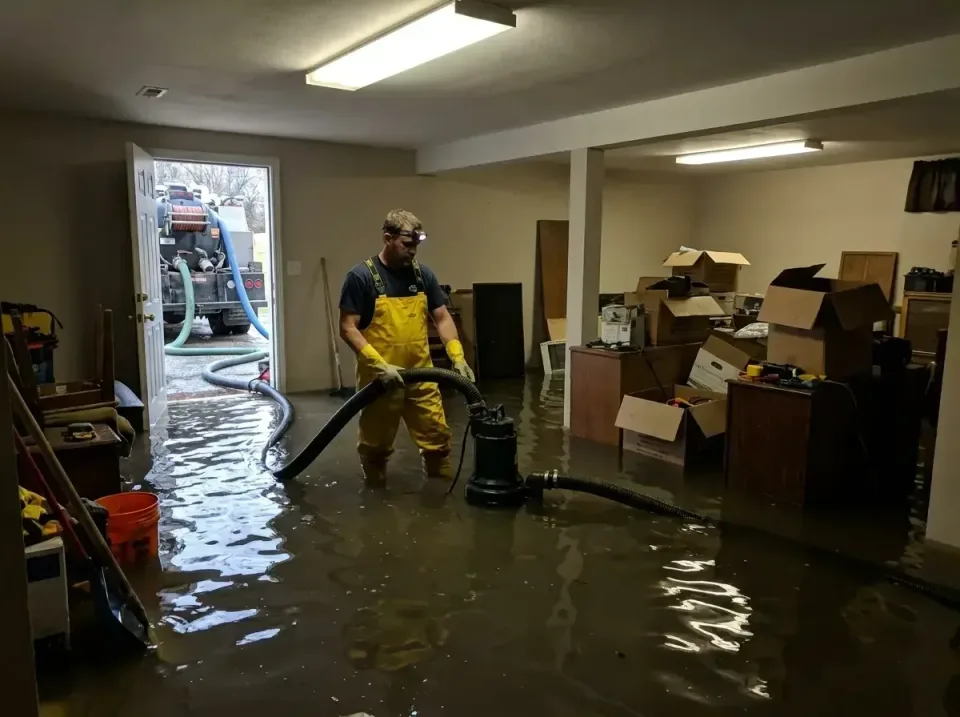
Emergency Water Extraction & Flood Cleanup
Homeowners, contractors, and property managers book Fontana flood cleanup for standing water extraction and structural drying.
A musty odor after basement flooding often signals trapped moisture and possible mold growth. EPA guidance allows limited homeowner cleanup when the affected mold area is under 10 square feet.
In Fontana, California, check wet drywall, stored boxes, carpet edges, and floor-wall joints first. Odor that returns after ventilation usually means moisture remains inside materials.
Do not scrub visible growth before finding the leak or drying the room. Water Damage Services can trace the source, document affected areas, and separate cleanup from needed repairs.
If you need help beyond Fontana, review the water damage service areas available for related restoration coverage. Keep people away from contaminated water until its category is confirmed.
Musty odor: A basement smell that returns after airing out points toward concealed dampness, especially beneath flooring.
Leaking pipe: Visible mold near a leaking pipe needs source control before cleaning, or growth may return.
Damp carpet: Carpet still damp after cleanup can hide moisture beneath the pad and delay proper structural drying.
Crawl space ducts: Condensation on crawl space ducts shows a psychrometric imbalance involving air, temperature, and moisture.
Professional verification: Clearance testing provides post-remediation verification after mold removal, rather than relying on odor alone.
Moisture mapping creates a documented record of wet areas, readings, and material changes. A professional may pair it with water extraction and daily observations.
For Fontana homes, ask for written findings covering damaged gypsum wallboard, flooring, and the suspected moisture source. This makes repair decisions easier.
A musty basement odor is a warning, not proof by itself. Mold becomes more likely when the smell follows flooding, brown ceiling stains, damp carpet, or visible growth near a leaking pipe.
Start with source control. Check plumbing, foundation seepage, condensate lines, and roof drainage before treating surfaces. Recurring sewage odor near a drain requires contamination control, not household deodorizer.
The EPA publication Mold Remediation in Schools and Commercial Buildings supports a measured approach: identify moisture, remove damaged materials, and prevent spread. A homeowner may handle a small isolated area, but larger or hidden growth needs mold remediation.
Technicians use moisture mapping to record wet boundaries across drywall, flooring, insulation, and contents. Psychrometry describes how air temperature, humidity, and material moisture interact, helping explain why a cool basement can smell damp even without standing water.
Water extraction removes bulk water with vacuum equipment. Structural drying then controls evaporation with air movers and dehumidification, while readings are compared against unaffected materials.
An infrared thermal imaging camera can locate temperature patterns, but meters confirm whether a surface is wet. Pin meters measure depth, while pinless meters scan broader areas without puncturing finishes.
EPA guidance identifies under 10 square feet as a limited homeowner-cleanup range. That does not cover sewage contamination, extensive porous materials, hidden wall growth, or a basement where the source remains active.
The ANSI/IICRC S520 Standard for Professional Mold Remediation addresses containment, work practices, and verification. A HEPA air scrubber can filter particles, while polyethylene containment sheeting helps isolate the work zone.
DIY fans may reduce surface odor without drying wall cavities. A professional setup uses an air mover for evaporation, an LGR dehumidifier for vapor removal, and daily drying records.
Mold remediation is incomplete if the basement still receives water. Repair may involve leak detection and plumbing repair, crawl space moisture control, ceiling water damage drying, or replacement of swollen gypsum wallboard.
A provider should photograph rooms, contents, and meter readings before removal. Sewage areas should remain isolated from occupied spaces, and contaminated-project filters should be replaced.
Clearance testing can verify conditions after cleanup when the project or occupant requires it. Water Damage Services can explain whether odor treatment, indoor air quality testing, or insurance claim documentation fits the findings.
A recurring drain odor, spreading ceiling stain, or damp carpet after earlier cleanup deserves inspection rather than repeated fragrance products. That approach addresses the source before mold-contaminated material disposal becomes a larger job. The ANSI/IICRC S500 Standard for Professional Water Damage Restoration also emphasizes controlled drying and documentation; local water damage inspection guidance can help homeowners understand why readings matter.
The right service depends on the water source, affected materials, and whether growth is visible or concealed. Basement water removal handles extraction first, while mold remediation adds containment and cleaning controls.
| Option | Best for | Key detail |
|---|---|---|
| Basement water removal | Standing water and saturated finishes | Extraction precedes drying; access may require a 32-inch minimum ADA clear doorway. |
| Structural drying | Damp carpet, drywall, or flooring | Air movers accelerate evaporation; dehumidifiers remove vapor. |
| Crawl space moisture control | Duct condensation and recurring humidity | A 36-inch target equipment access route helps position equipment safely. |
| Mold remediation | Visible or concealed mold growth | Negative air and containment limit spread; a 20-yard roll-off container may suit larger removal. |
HEPA equipment specifications should be confirmed before work begins, including the stated 3-micron HEPA filtration standard. Restoration equipment and cleanup practices can provide useful comparison points when reviewing a proposed scope.
Photograph: Record rooms, contents, stains, and visible growth before moving anything.
Classify: Determine whether the water was Category 1 water, contaminated gray water, or sewage-contaminated water.
Clear furniture: Move furniture before extraction, keeping hoses routed away from exits and walkways.
Confirm access: Verify power and water access, with same-day equipment placement when available.
Extract: Remove standing water, then place drying equipment without blocking egress.
Monitor: Document daily moisture readings and reposition equipment as drying conditions change.
Finish safely: Use antimicrobial treatment when appropriate, and confirm state mold licensing rules because requirements vary by jurisdiction.
Water Damage Services can review the odor history, photographs, and suspected leak before recommending inspection or cleanup.
Leak detection: $300–$1,200, depending on access and repair complexity.
Emergency extraction: $500–$1,500, based on standing water volume.
Structural drying: $1,000–$4,000, based on affected materials.
Mold remediation: $1,500–$6,000, based on containment and square footage.
Basement cleanup: $2,000–$8,000, when sewage, finishes, and disposal are involved.
Commercial drying: $3,000–$15,000, based on size and downtime.
Drying within 24–72 hours is a mold-risk reduction goal, though saturated materials may require longer monitoring. Technicians may target moisture within 4 percentage points of unaffected materials.
Containment can require approximately -5 pascals of pressure, while HEPA filtration is rated at 99.97% at 0.3 microns. Quotes vary with scope, site conditions, contamination, materials, and labor.
Expert insight:
Treat Category 2 water as contaminated gray water, not ordinary clean water. Category 3 water is sewage-contaminated black water and needs stronger isolation, disposal, and protective procedures.
Moisture mapping should continue after extraction because wet insulation or wall cavities can keep producing odor. Structural drying removes moisture from building materials, rather than simply making the room smell cleaner.
An LGR dehumidifier is a low-grain-refrigerant unit that can remove substantial vapor during controlled drying. Its capacity may range from 80–160 pints daily, depending on conditions and equipment size.
Ask whether the proposed scope includes containment, equipment monitoring, and documentation. Water Damage Services can use the findings to distinguish odor treatment from needed material removal.
Common mistake: Placing a household fan on wet carpet without checking the pad, subfloor, or surrounding walls.
A musty basement odor deserves closer attention when it follows flooding, damp carpet, visible growth, or a water meter that moves with fixtures off. Indoor air quality testing may help when odor continues after the moisture source is corrected.
A portable dehumidifier may remove 70–160 pints daily, but capacity does not prove that wall cavities or flooring are dry. Respirator fit testing is required annually for users of tight-fitting respirators, so extensive contamination is not a casual cleanup project.
In Fontana, CA, Water Damage Services can inspect the moisture source, document conditions, and outline extraction, drying, or remediation steps. Start by recording the odor, recent leaks, damaged materials, and any recurring drain symptoms.
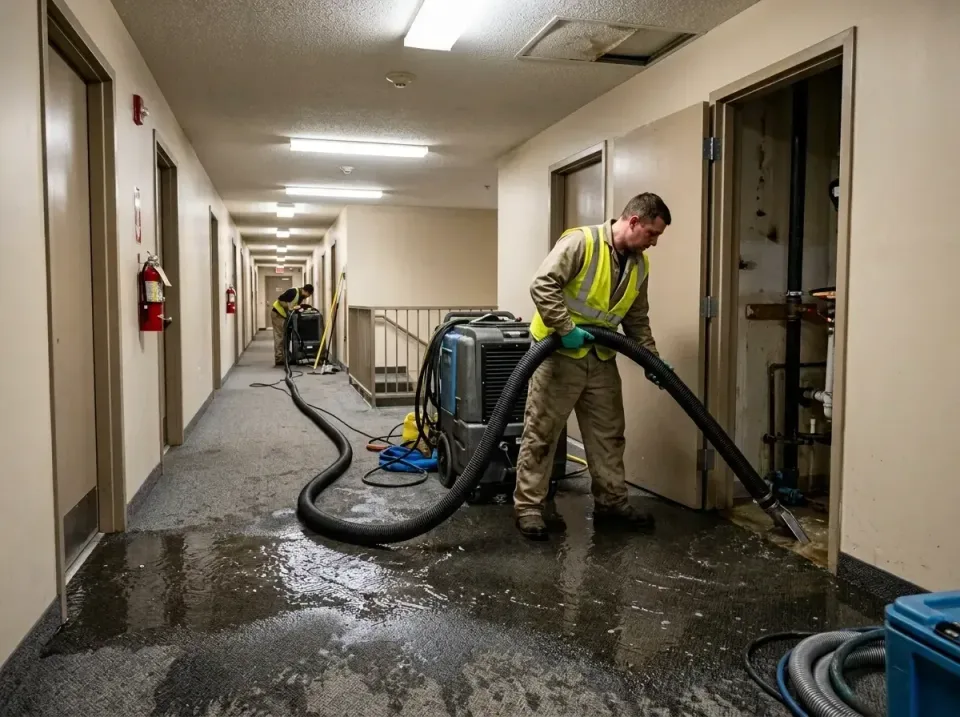
Browse all nationwide service options and choose the right fit for your project.
Homeowners, contractors, and property managers book Fontana flood cleanup for standing water extraction and structural drying.
Homeowners, contractors, and property managers book Fontana structural drying for wet walls, floors, carpets, and contents.
Homeowners, contractors, and property managers book Fontana leak tracing with thermal imaging and documented moisture mapping.
Homeowners, contractors, and property managers book Fontana crawl space drying, moisture mapping, and microbial-growth control.
Homeowners, property managers, and contractors book Fontana mold remediation for containment, removal, drying, and cleanup.
Homeowners and property managers book Fontana basement extraction, moisture checks, and structural drying after flooding or leaks.
Homeowners, property managers, and contractors book Fontana black mold removal with controlled spore containment.
Homeowners and property managers book Fontana ceiling drying for stains, leaks, damp drywall, and hidden moisture.
Sewage Water Removal & Contamination Cleanup in Fontana — practical container sizing, placement guidance, and disposal rules explained before you book.
Flood and fire cleanup in Fontana mixes wet materials and structural debris — carpet flood drying & wet material extraction with contamination-aware disposal guidance.
Homeowners, contractors, and property managers book Fontana hardwood floor drying after leaks, floods, or appliance failures.
Commercial drying removes water, protects materials, and documents progress for Fontana property managers, contractors, and business owners.
Homeowners, property managers, and contractors book Fontana emergency leak drying, extraction, and structural moisture control.
Homeowners and property managers book Fontana indoor air quality testing, mold prevention, containment, and odor control.
Homeowners, contractors, and property managers book Fontana dehumidification and air mover drying for controlled moisture removal.
Homeowners, contractors, and property managers book Fontana HEPA vacuuming and antimicrobial treatment after water or mold contamination.
Homeowners, contractors, and property managers book Fontana moisture inspections to locate hidden water and document drying needs.
Homeowners, contractors, and property managers book Fontana thermal imaging to locate hidden leaks and confirm wet building materials.
Homeowners, contractors, and property managers book Fontana content drying for wet furniture, electronics, documents, and salvageable belongings.
Local gray water damage removal & drying for Fontana with clear pricing drivers, weight limits, and scheduling you can plan around.
Need reliable Water Damage, Leak Detection & Mold Remediation Near Me in Fontana, CA, 92335? We extract water, map moisture, dry structures, and inspect leaks. Call (833) 710-2743.
Homeowners and property managers book Fontana mold removal, containment, and drying after leaks or flooding.
Homeowners and property managers book Fontana black water cleanup for sewage removal, contamination control, and documented structural drying.
Homeowners and property managers book Fontana odor treatment to remove lingering smells and improve indoor air after water damage.
Homeowners, contractors, and property managers book Fontana claim records, moisture readings, photos, and drying reports.
Select your region to see local water damage, leak detection & mold remediation near me providers and cities we cover.
We connect you with trusted local providers in your state or city. Call or email us today.