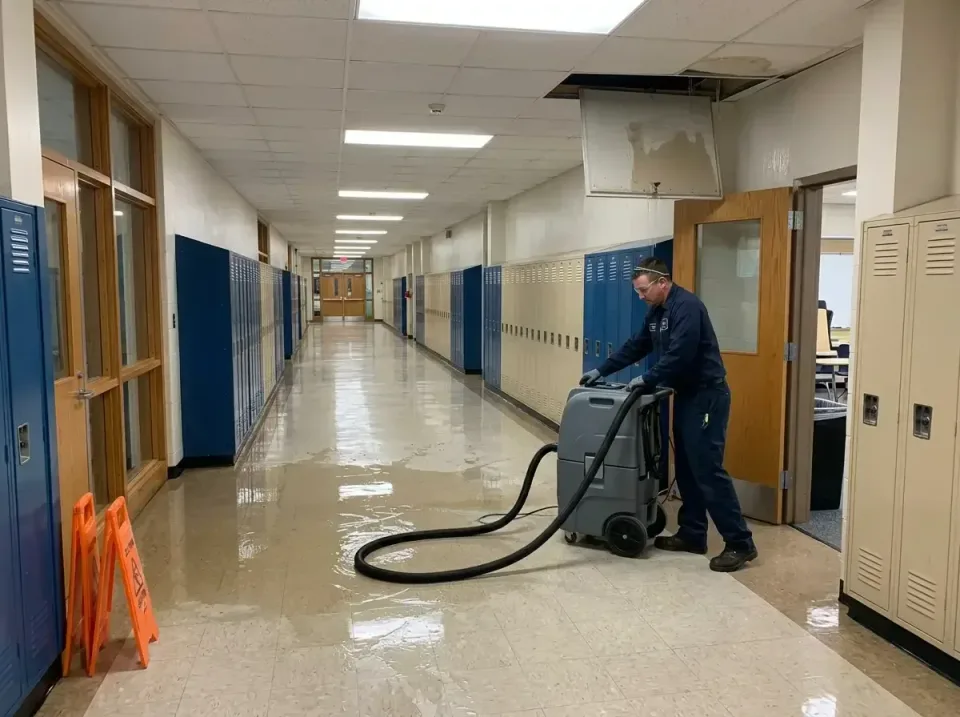
Emergency Water Extraction & Flood Cleanup
Homeowners, contractors, and property managers book Fontana flood cleanup for standing water extraction and structural drying.
A spreading brown ceiling stain usually means moisture remains above the visible damage or the leak has not stopped. A musty odor after basement flooding also signals damp materials that need inspection.
Water can travel along framing, insulation, and gypsum before appearing several feet away. In Fontana, California, roof, plumbing, and cooling-system leaks can create similar ceiling marks.
Do not paint over the stain before finding the source. Photograph the area, limit contact with damaged materials, and check nearby rooms for soft finishes or odors.
Water Damage Services helps Fontana property owners trace moisture, document affected areas, and plan drying. Coverage information is available through all service areas, while regional water damage cleaning guidance shows why hidden moisture needs more than surface repairs.
Stain movement: Brown ceiling stains spreading outward often indicate continuing moisture behind gypsum wallboard.
Odor warning: A musty odor after basement flooding can remain while concealed framing and insulation stay damp.
Drying check: A carpet still damp after cleanup needs documented moisture readings, not only household fans.
Equipment choice: An air mover accelerates evaporation, while psychrometry tracks air, moisture, and temperature relationships.
Mold decision: EPA guidance treats areas under 10 square feet as limited homeowner cleanup, while larger growth may require mold remediation under ANSI/IICRC S520 practices.
A ceiling stain grows when water continues entering or moves through porous building materials. A roof penetration, supply line, drain, or failed seal can feed moisture above the original mark. Leak detection and plumbing repair should happen before cosmetic work, because new paint can hide an active source.
Thermal imaging leak screening helps locate temperature patterns around pipes, roof assemblies, and ceiling framing. The camera does not prove a wall is wet; moisture meters confirm the finding. Temporary roof leak protection can limit additional entry while permanent repairs are arranged.
In Fontana homes, technicians should inspect the attic, upper plumbing, HVAC routes, and the room directly above the stain. A ceiling may look dry while insulation or gypsum remains wet. Digital moisture mapping reports create a record of where readings were taken and which areas need follow-up.
A carpet still damp after cleanup often means water remains in the pad, tack strips, subfloor, or nearby wall base. Water extraction removes liquid water, but structural drying removes moisture held inside materials. An air mover increases evaporation; a dehumidifier removes the resulting vapor.
The ANSI/IICRC S500 Standard for Professional Water Damage Restoration supports measured drying rather than relying on touch. Daily readings should compare affected materials with an unaffected dry standard. If the source was contaminated, technicians should isolate the work area and replace filters after contaminated-water projects.
A visible ceiling mark may connect to damp carpet through wall cavities or floor assemblies. That is why inspection should follow the water path instead of treating only the most obvious stain. Thermal water damage inspection practices can help homeowners understand why visual checks alone miss concealed moisture.
Visible mold near a leaking pipe changes the work from simple drying to controlled mold remediation. The ANSI/IICRC S520 Standard for Professional Mold Remediation emphasizes containment, source control, and cleaning methods suited to the affected material.
A HEPA air scrubber uses High-Efficiency Particulate Air filtration to capture fine airborne particles during controlled work. Containment keeps dust and spores from moving into occupied rooms. Porous gypsum, insulation, and carpet may require removal when cleaning cannot restore a dry, sound surface.
Do not disturb suspicious growth with dry brushing or household fans. If contaminated materials are removed, workers should follow OSHA 29 CFR 1910.134 respiratory-protection requirements and change filtration after the project. Antimicrobial products should support cleaning, not replace source correction or drying.
Call Water Damage Services when the stain spreads, returns after painting, or appears with damp carpet, ceiling sagging, or visible mold. Professional assessment is especially useful when a water meter moves with fixtures off, because that symptom can indicate a concealed plumbing leak.
A technician can trace the source, document moisture, and separate clean-water drying from contaminated-water handling. Water from a broken supply line may be Category 1, while sewage requires Category 3 controls. The category affects removal, protection, disposal, and equipment handling.
A small isolated mark may be manageable after the source is repaired, but repeated staining usually deserves a full inspection. Insurance mitigation documentation can preserve photographs, readings, and repair details before materials are removed.
The right service depends on water volume, material damage, access, and contamination. Equipment placement also requires a clear route through the home.
| Option | Best for | Key detail |
|---|---|---|
| Emergency flood cleanup | Standing water | Axial air movers may deliver 1,000–2,500 CFM. |
| Structural drying | Wet ceilings and floors | Air movers accelerate evaporation; dehumidifiers remove vapor. |
| Mold remediation | Visible growth | HEPA equipment should meet the 3-micron HEPA filtration standard. |
| Commercial water mitigation | Large occupied properties | Plan for 36-inch target equipment access and protected walkways. |
A 32-inch minimum ADA clear doorway can affect equipment delivery and furniture movement. Restoration equipment access guidance helps explain why technicians check entrances before staging machines.
Photograph: Capture the ceiling, contents, and meter readings before moving materials or opening finishes.
Find the source: Arrange inspection for plumbing, roofing, or HVAC leaks before cosmetic repairs begin.
Classify water: Treat a sanitary supply leak as Category 1 water, but isolate areas affected by Category 3 sewage-contaminated black water.
Prepare access: Move furniture before extraction, confirm power and water access, and keep hoses away from exits.
Start drying: Request same-day equipment placement when available, then document daily readings and reposition machines as needed.
Close the job: Stage contents in labeled zones, obtain disposal approval, and replace filters after contaminated-water projects. Leak detection may cost $300–$1,200 because access and repair complexity change the work.
Typical leak detection costs range from $300–$1,200, while emergency extraction often runs $500–$1,500. Access, repair complexity, and standing water volume drive those ranges.
Structural drying commonly costs $1,000–$4,000 for affected materials. Portable dehumidifiers may remove 70–160 pints daily, while common air movers produce 800–1,200 CFM.
Mold remediation may range from $1,500–$6,000, based on containment and square footage. EPA guidance identifies areas under 10 square feet as limited homeowner cleanup, but concealed growth can expand the scope.
Basement cleanup may cost $2,000–$8,000 when sewage, finishes, and disposal are involved. Commercial drying can reach $3,000–$15,000 because building size and downtime add work.
Quotes vary with scope, site conditions, contamination, materials, and labor.
A stain is a symptom, not a moisture reading. Use psychrometry to understand how room conditions affect drying, then confirm the dry standard with documented measurements.
If water reached a wall cavity, an LGR dehumidifier can remove vapor while structural drying addresses moisture inside materials. Category 2 water, or contaminated gray water, needs contamination controls rather than ordinary household cleanup.
Negative air provides filtered exhaust containment during controlled removal. It works with physical containment, which separates the work zone from occupied rooms.
A common failure is running fans without checking readings. That can spread dust, dry the surface while leaving the cavity wet, and delay the repair decision.
Common mistake: Painting over a brown mark before correcting the leak and verifying the surrounding materials are dry.
A spreading brown stain needs source control, moisture mapping, and a drying decision based on materials rather than appearance. Visible mold near a leaking pipe, recurring odor, or a water meter that moves with fixtures off deserves prompt inspection.
Indoor air quality testing may help after remediation when odors or respiratory concerns remain. Containment pressure near -5 pascals can support controlled work, while tight-fitting respirator users need annual fit testing.
For homes in Fontana, CA, Water Damage Services can inspect the leak path, document affected areas, and explain repair choices. Bring photographs, utility details, and any prior cleanup records.
The next step is a focused Water Damage Services assessment before repainting or discarding materials.
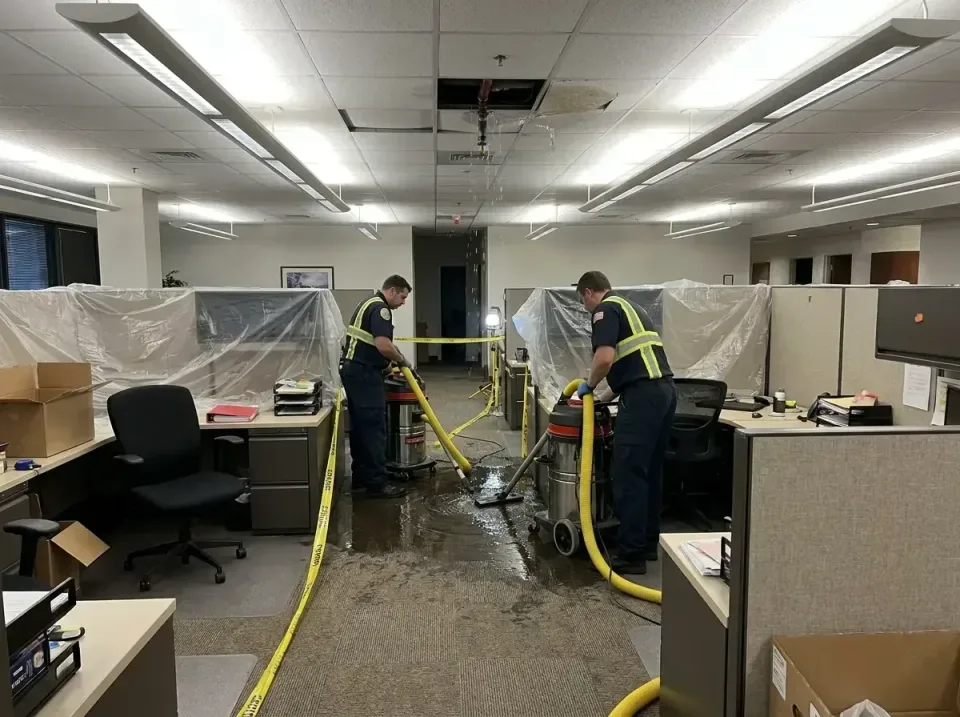
Browse all nationwide service options and choose the right fit for your project.
Homeowners, contractors, and property managers book Fontana flood cleanup for standing water extraction and structural drying.
Homeowners, contractors, and property managers book Fontana structural drying for wet walls, floors, carpets, and contents.
Homeowners, contractors, and property managers book Fontana leak tracing with thermal imaging and documented moisture mapping.
Homeowners, contractors, and property managers book Fontana crawl space drying, moisture mapping, and microbial-growth control.
Homeowners, property managers, and contractors book Fontana mold remediation for containment, removal, drying, and cleanup.
Homeowners and property managers book Fontana basement extraction, moisture checks, and structural drying after flooding or leaks.
Homeowners, property managers, and contractors book Fontana black mold removal with controlled spore containment.
Homeowners and property managers book Fontana ceiling drying for stains, leaks, damp drywall, and hidden moisture.
Sewage Water Removal & Contamination Cleanup in Fontana — practical container sizing, placement guidance, and disposal rules explained before you book.
Flood and fire cleanup in Fontana mixes wet materials and structural debris — carpet flood drying & wet material extraction with contamination-aware disposal guidance.
Homeowners, contractors, and property managers book Fontana hardwood floor drying after leaks, floods, or appliance failures.
Commercial drying removes water, protects materials, and documents progress for Fontana property managers, contractors, and business owners.
Homeowners, property managers, and contractors book Fontana emergency leak drying, extraction, and structural moisture control.
Homeowners and property managers book Fontana indoor air quality testing, mold prevention, containment, and odor control.
Homeowners, contractors, and property managers book Fontana dehumidification and air mover drying for controlled moisture removal.
Homeowners, contractors, and property managers book Fontana HEPA vacuuming and antimicrobial treatment after water or mold contamination.
Homeowners, contractors, and property managers book Fontana moisture inspections to locate hidden water and document drying needs.
Homeowners, contractors, and property managers book Fontana thermal imaging to locate hidden leaks and confirm wet building materials.
Homeowners, contractors, and property managers book Fontana content drying for wet furniture, electronics, documents, and salvageable belongings.
Local gray water damage removal & drying for Fontana with clear pricing drivers, weight limits, and scheduling you can plan around.
Need reliable Water Damage, Leak Detection & Mold Remediation Near Me in Fontana, CA, 92335? We extract water, map moisture, dry structures, and inspect leaks. Call (833) 710-2743.
Homeowners and property managers book Fontana mold removal, containment, and drying after leaks or flooding.
Homeowners and property managers book Fontana black water cleanup for sewage removal, contamination control, and documented structural drying.
Homeowners and property managers book Fontana odor treatment to remove lingering smells and improve indoor air after water damage.
Homeowners, contractors, and property managers book Fontana claim records, moisture readings, photos, and drying reports.
Select your region to see local water damage, leak detection & mold remediation near me providers and cities we cover.
We connect you with trusted local providers in your state or city. Call or email us today.