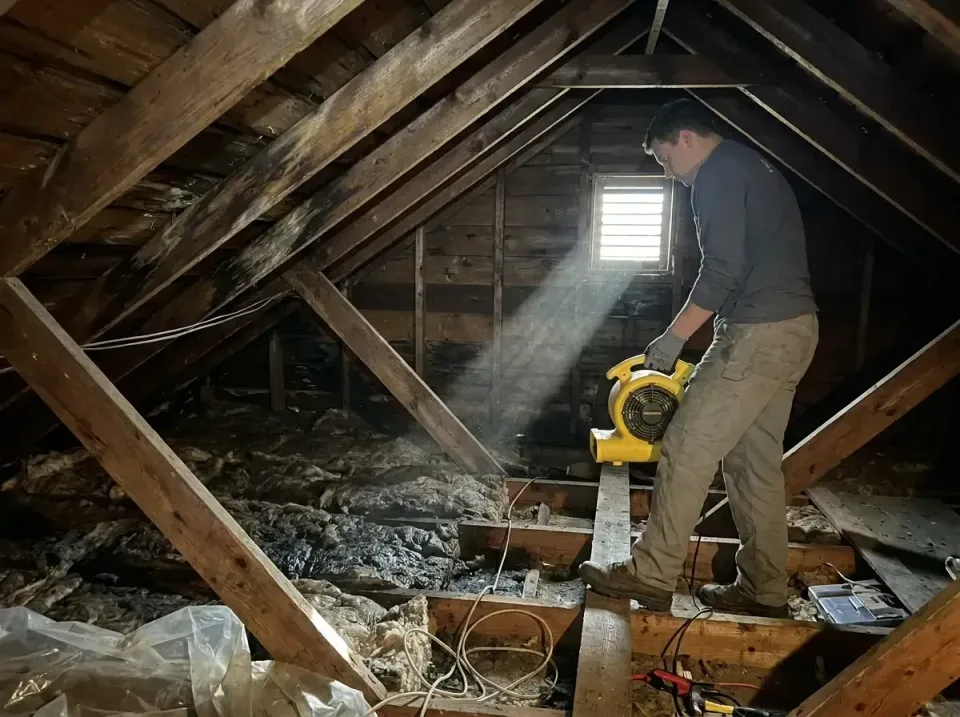
Emergency Water Extraction & Flood Cleanup
Homeowners, contractors, and property managers book Fontana flood cleanup for standing water extraction and structural drying.
Musty odor after basement flooding does not automatically require a permit, but rebuilding often does. In Fontana, drying and cleanup differ from reconstruction, especially after Category 3 water, meaning sewage-contaminated black water.
Category 1 water from a sanitary supply line may need extraction and drying without a building permit. Replacing gypsum wallboard, insulation, flooring, wiring, or plumbing can trigger local review.
Water Damage Services separates emergency stabilization from permitted repairs. That distinction helps protect your claim and keeps work aligned with Fontana requirements.
Homeowners needing broader coverage can review all service areas while keeping local permit questions with the applicable building department. Photograph damage before materials are removed.
Brown ceiling stains: A spreading stain may indicate a concealed plumbing or roof repair, not just surface drying.
Water meter movement: If the meter moves with fixtures off, arrange leak detection before closing walls or requesting reconstruction approval.
Carpet still damp: Water extraction removes liquid, while moisture mapping documents remaining wet areas for structural drying decisions.
Condensation on ducts: Psychrometry, the relationship between air, moisture, and temperature, can show why crawl space work needs more than fans.
Visible mold: Category 2 water is contaminated gray water, so contamination control separates clean areas from affected spaces before removal. An isolated containment barrier helps prevent spread, and regional restoration examples show why documented scopes matter.
A permit question usually begins after the emergency, but the first task is source control: stop the incoming water and protect occupants. Water Damage Services can perform water damage inspection, water extraction, and structural drying while the owner confirms whether planned reconstruction needs a Fontana permit.
The ANSI/IICRC S500 Standard for Professional Water Damage Restoration guides restoration documentation, while local building permits govern reconstruction requirements that vary by jurisdiction. Removing wet carpet or setting drying equipment is generally different from rebuilding a wall, relocating plumbing, replacing electrical work, or changing structural members.
If a ceiling stain spreads outward, do not paint over it before the source is checked. Moisture mapping, meter readings, photographs, and a written scope give the owner useful records before drywall or insulation is removed. The local restoration service overview illustrates why repair scope and drying scope should remain separate in project records.
Permit review becomes more likely when repairs alter a building system. Examples include replacing sections of gypsum wallboard after a hidden leak, repairing supply or drain piping, replacing damaged electrical components, rebuilding framing, or restoring a roof assembly. The International Building Code is adopted locally with changes, so the city’s current requirements control.
A soft floor around a refrigerator may involve a supply line, subfloor, or engineered hardwood flooring. Drying can begin while the owner confirms the repair path, but permanent replacement should not conceal wet framing. A brown ceiling stain may similarly require plumbing or roof work before patching.
The 2008 EPA updated mold remediation guidance, but EPA guidance does not replace local construction permits. If mold is present, ANSI/IICRC S520 practices can inform containment and cleaning, while the building department decides whether reconstruction requires a permit. State mold licensing rules also vary by jurisdiction.
A permit process should not delay reasonable steps that prevent further damage. Water Damage Services may place drying equipment, protect contents, and isolate an affected area while the owner pursues permit answers for later reconstruction. An LGR dehumidifier removes moisture from air, while an air mover increases evaporation; they perform different jobs.
Visible mold near a leaking pipe requires careful separation of source control, cleanup, and rebuilding. A HEPA air scrubber provides 99.97% filtration at its rated performance, and a negative-air machine with ducting can support an isolated work area. Before work begins, ask for a written scope identifying removal, drying, antimicrobial treatment, and reconstruction.
For pre-1978 painted surfaces, the EPA Renovation, Repair and Painting Rule may affect how disturbing painted materials is handled. OSHA 29 CFR 1910.134 addresses respirator programs for workers. These safety rules do not create a building permit, but they can change how the work is performed.
Ask the contractor which tasks are emergency mitigation and which tasks are reconstruction. Request photographs, moisture readings, affected-material descriptions, and a list of proposed replacements. Those records help an owner discuss the job with the city, insurer, and any licensed trade involved.
A recurring sewage odor near a drain should not be treated as a cosmetic problem. It may indicate continuing source control needs or Category 3 contamination. Keep sewage areas isolated from occupied rooms, and do not approve disposal of contents before documenting condition and receiving owner approval.
Water Damage Services can coordinate leak detection and plumbing repair, drying, mold remediation, and insurance claim documentation. The practical rule is simple: stabilize first, verify the source, ask the local building department about reconstruction, then close the building only after readings support the dry standard.
The service determines the evidence needed before reconstruction. Digital moisture mapping reports can show why basement water removal is complete or why materials remain unsuitable for replacement.
| Option | Best for | Key detail |
|---|---|---|
| Emergency flood cleanup | Standing water | Clean water needs drying; sewage requires contamination controls. |
| Structural drying | Wet framing and finishes | Pin and pinless meters document conditions before closure. |
| Basement water removal | Flooded lower levels | A 20-yard roll-off container may require placement planning. |
| Mold remediation | Mold-affected materials | HEPA-filtered containment zones separate work areas. |
A permit is more likely for permanent reconstruction than for extraction or monitoring. Water damage permit considerations can help frame questions about scope, access, and disposal without replacing Fontana’s own determination.
Photograph: Capture rooms, contents, visible damage, and meter readings before removal.
Stop water: Confirm source control, then separate sewage areas from occupied spaces with polyethylene containment sheeting.
Place equipment: Arrange same-day equipment placement when available, using an axial air mover rated around 1,000–2,500 CFM.
Protect access: Confirm power and water access, route hoses away from exits, and preserve a 36-inch target equipment path where possible.
Log progress: Record daily readings, equipment placement, and repositioning; the American National Standards Institute supports consistent technical documentation.
Verify scope: Ask the building department about reconstruction, and keep contents staged in labeled zones until disposal approval is documented. Restoration documentation guidance can help owners organize records before reconstruction discussions.
Restoration and permit-related reconstruction are separate budget lines. The following ranges describe common service scopes, while Fontana labor, access, materials, and disposal conditions can change the final amount.
Leak detection: $300–$1,200, based on access and repair complexity.
Emergency extraction: $500–$1,500, based on standing water volume.
Structural drying: $1,000–$4,000, based on affected materials.
Mold remediation: $1,500–$6,000, based on containment and square footage.
Basement cleanup: $2,000–$8,000, based on sewage, finishes, and disposal.
Commercial drying: $3,000–$15,000, based on size and downtime.
An 800–1,200 CFM air mover range is common for commercial equipment, while a 3-micron HEPA filtration standard may affect containment planning. EPA mold guidance describes limited homeowner cleanup under 10 square feet. Quotes vary with scope, site conditions, contamination, materials, and labor.
Expert insight:
Stop the leak before judging drying progress. A dry standard compares affected materials with unaffected materials, and the target is often within 4 percentage points.
An air mover accelerates evaporation, but it does not remove vapor like a dehumidifier. Clearance testing, meaning post-remediation verification, can help confirm that a mold cleanup is ready for the next phase.
A carpet may feel dry while the subfloor remains wet. Water Damage Services checks moisture mapping and psychrometry before recommending replacement or wall closure.
Common mistake: Treating a permit as proof that hidden materials are dry. Permit approval addresses construction compliance, not moisture conditions behind finished surfaces.
For a brown ceiling stain or musty basement, request source control, readings, and a written scope before signing reconstruction work. That sequence reduces rework and makes the permit conversation more precise.
Water damage repairs usually need local building permits when they rebuild or alter plumbing, electrical, framing, roofing, or finished assemblies. Extraction, drying, and documentation can often begin separately, but the local building department determines reconstruction requirements.
In Fontana, keep photographs, moisture readings, invoices, and the repair scope together. A 24–72-hour drying window is a mold-risk reduction goal, not permission to close walls before readings support dryness.
Soft flooring around a refrigerator, recurring sewage odor, or damp hardwood floor calls for source control and inspection first. Water Damage Services can help organize leak detection, drying, mold work, and insurance documentation.
Use the broader restoration coverage directory if the property or project crosses service boundaries. Then request a clear quote and permit-scope review from Water Damage Services.
Browse all nationwide service options and choose the right fit for your project.
Homeowners, contractors, and property managers book Fontana flood cleanup for standing water extraction and structural drying.
Homeowners, contractors, and property managers book Fontana structural drying for wet walls, floors, carpets, and contents.
Homeowners, contractors, and property managers book Fontana leak tracing with thermal imaging and documented moisture mapping.
Homeowners, contractors, and property managers book Fontana crawl space drying, moisture mapping, and microbial-growth control.
Homeowners, property managers, and contractors book Fontana mold remediation for containment, removal, drying, and cleanup.
Homeowners and property managers book Fontana basement extraction, moisture checks, and structural drying after flooding or leaks.
Homeowners, property managers, and contractors book Fontana black mold removal with controlled spore containment.
Homeowners and property managers book Fontana ceiling drying for stains, leaks, damp drywall, and hidden moisture.
Sewage Water Removal & Contamination Cleanup in Fontana — practical container sizing, placement guidance, and disposal rules explained before you book.
Flood and fire cleanup in Fontana mixes wet materials and structural debris — carpet flood drying & wet material extraction with contamination-aware disposal guidance.
Homeowners, contractors, and property managers book Fontana hardwood floor drying after leaks, floods, or appliance failures.
Commercial drying removes water, protects materials, and documents progress for Fontana property managers, contractors, and business owners.
Homeowners, property managers, and contractors book Fontana emergency leak drying, extraction, and structural moisture control.
Homeowners and property managers book Fontana indoor air quality testing, mold prevention, containment, and odor control.
Homeowners, contractors, and property managers book Fontana dehumidification and air mover drying for controlled moisture removal.
Homeowners, contractors, and property managers book Fontana HEPA vacuuming and antimicrobial treatment after water or mold contamination.
Homeowners, contractors, and property managers book Fontana moisture inspections to locate hidden water and document drying needs.
Homeowners, contractors, and property managers book Fontana thermal imaging to locate hidden leaks and confirm wet building materials.
Homeowners, contractors, and property managers book Fontana content drying for wet furniture, electronics, documents, and salvageable belongings.
Local gray water damage removal & drying for Fontana with clear pricing drivers, weight limits, and scheduling you can plan around.
Need reliable Water Damage, Leak Detection & Mold Remediation Near Me in Fontana, CA, 92335? We extract water, map moisture, dry structures, and inspect leaks. Call (833) 710-2743.
Homeowners and property managers book Fontana mold removal, containment, and drying after leaks or flooding.
Homeowners and property managers book Fontana black water cleanup for sewage removal, contamination control, and documented structural drying.
Homeowners and property managers book Fontana odor treatment to remove lingering smells and improve indoor air after water damage.
Homeowners, contractors, and property managers book Fontana claim records, moisture readings, photos, and drying reports.
Select your region to see local water damage, leak detection & mold remediation near me providers and cities we cover.
We connect you with trusted local providers in your state or city. Call or email us today.